
 首页
首页
-
 Towards single crystals of covalent organic polymers/frameworks
Qichun Zhang 教授 City University of Hong Kong
Covalent organic polymers/frameworks (COPs/COFs) have caused many scientists' interest in both fundamental research (synthesis, properties, theoretical simulation, etc.) and possible applications (gas absorption/separation, catalysis, energy-related devices, sensing, imaging, and so on). In this talk, I will present our recent progress on the preparation of novel COPs/COFs single crystals as well as their diverse applications in optoelectrical devices. -
 Illuminating Polymer Stress- The Innovative Use of Aggregacgrimic Fluorophores for Detection and Analysis
Andrea Pucci 教授 University of Pisa
This study introduces an innovative approach for detecting and analyzing polymer stress using aggregation-induced emission (AIE) fluorophores. By incorporating AIEgens into polymer matrices, we develop a sensing system where mechanical stress induces distinct changes in molecular packing and emission behavior. The resulting fluorescence response provides a direct optical readout of stress distribution and microstructural changes in polymers, enabling real-time monitoring and analysis. This work establishes AIE-based fluorophores as versatile tools for advanced stress diagnostics in polymer science and engineering. -
 Molecular Interfaces for CO2 Reduction
Ruquan Ye 教授 City University of Hong Kong
Carbon dioxide reduction to produce various fuels and chemical products can simultaneously fix carbon dioxide and convert renewable electrical energy into chemical energy storage, making it an attractive route to achieve a closed-loop carbon cycle. This talk will mainly cover our research in the past 5 years in developing efficient catalysts and their interfaces for CO2 reduction reaction. I will then focus on metal complexes, an important class of catalysts with the advantages of well-defined and controllable structures. Due to the molecular aggregation and leaching effects in the catalytic process, the low conversion frequency, low electron transport rate and poor stability of molecular catalysts in the heterogeneous catalytic process are encountered. I will summarize our group’ s recent progress in understanding the influence of catalyst interface aggregation effect on catalytic mechanism and product selectivity; this includes the in-depth understanding of interface electron transport and molecular configuration evolution, which change the product turnover and even selectivity. Finally, I will demonstrate some strategies to control interfacial aggregated state, such that efficient and controllable two-electron and multi-electron reduction can be attained, particularly in the challenging environment of acidic conditions. -
 Nanoclusters as Catalysts for Energy Conversion
Megalamane Bootharaju 副教授 Seoul National University
Nanostructured materials possess unique optical and chemical properties that drive progress in optoelectronics, catalysis, and energy conversion. However, conventional nanoparticles lack atomic-level size control, limiting our understanding of structure–property relationships. Atomically precise nanoclusters, defined as discrete molecular entities, provide an ideal platform to unravel such correlations and enable rational design at the superatomic level. In this talk, I will present how synergistic atomic-level interactions in alloy nanoclusters, coupled with precise control over the local chemical environment and surface functionalization, markedly enhance catalytic performance in electrochemical CO2 reduction and solar hydrogen generation. I will further discuss how core–shell engineering, heteroatom incorporation, and ligand modulation tune the electronic structure, offering molecular-level insights into reactivity and selectivity. Additionally, insights into interfacial water structure, charge distribution, and cluster–support interactions establish design principles for efficient, stable, and scalable catalysts. This integration of molecular understanding with application-driven design advances sustainable technologies for carbon-neutral energy and chemical production. -
 Preparation and Humidity-Responsive Properties of 2D Ordered Crystalline Polymer Films
Wenjing Tian 教授 Jilin University
Incorporating π-conjugated structures into organic polymers facilitates the construction of crystalline functional polymers with highly ordered structures. The high crystallinity, large specific surface area and excellent chemical stability of polymers facilitate significant potential for applications in gas adsorption and separation, heterogeneous catalysis, chemical sensing, photoelectric conversion, and energy storage. In our previous studies, through rational design of molecular building blocks, we developed a series of functional crystalline polymers with fluorescent response properties, which were successfully applied in the detection of metal ions, organic molecules, volatile compounds, and efficient iodine vapor capture. Furthermore, by employing flexible linking units and hydrogen-bond modulation strategies, we achieved a structural transition from amorphous to crystalline polymers, systematically elucidating the effects of external conditions—such as temperature, pH, and hydrogen bonding—on the self-assembly and crystallization mechanisms.Based on previous work, this study aims to optimize the properties of crystalline polymers via structural regulation to expand their applications in electrical sensing. Through function-oriented molecular engineer with precise control over the electronic structure and hydrophilic sites of the building units, we successfully developed an ultrathin two-dimensional ordered crystalline polymer film. Featuring electron-rich triazine structure and hydrophilic hydroxyl groups, this material exhibits excellent electrical response characteristics. It demonstrates highly sensitive humidity detection with a wide linear range and ultrafast response/recovery time and has been effectively applied in real-time breath monitoring. This work not only deepens the understanding of structure–property relationships in 2D ordered crystalline polymers but also offers innovative design strategies for developing advanced optoelectronic polymer materials.
第203次:聚集体科学
论坛执行主席
-
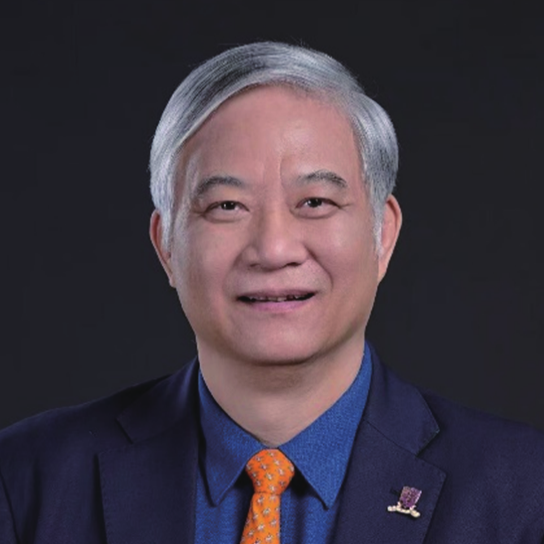 唐本忠院士
唐本忠院士
-
-
-
-
-
-
论坛日期:2025年11月21-22日
论坛地点:香港(香港中文大学)
承办单位:中国科学院学部学术与出版工作委员会
论坛摘要
聚集体科学作为化学、材料科学、生物、物理等学科交叉融合形成的前沿领域,近年来在聚集诱导发光、超分子组装、生物聚集体调控、功能软物质设计等方面取得了一系列突破性进展,展现出从基础研究到能源、医学、信息等关键领域应用的巨大潜力。然而,该领域在复杂聚集过程的动态机制解析、理论预测与精准构筑、微观结构与宏观功能的构效关系探索等方面仍面临深层挑战。为凝练学科核心方向、推动范式创新,于2025年11月21日至22日在香港中文大学召开了以“聚集体科学”为主题的科学与技术前沿论坛。论坛旨在系统探讨聚集体的形成机制、动态本质与功能涌现规律、聚集体范畴多类别材料及其多元应用,促进建立从分子到聚集体的可预测、可调控研究新范式。详情...
主题报告

主办单位:中国科学院学部学术与出版工作委员会
技术支持:中国科学院计算机网络信息中心
关于学术引领网站上的任何文字、图片、视频资料的使用必须经过中国科学院学部工作局的许可
© 1996 - 中国科学院 版权所有 京ICP备05002857号-1 京公网安备110402500047号
通讯地址:北京市海淀区中关村北一条15号(100190)
