
 首页
首页
-
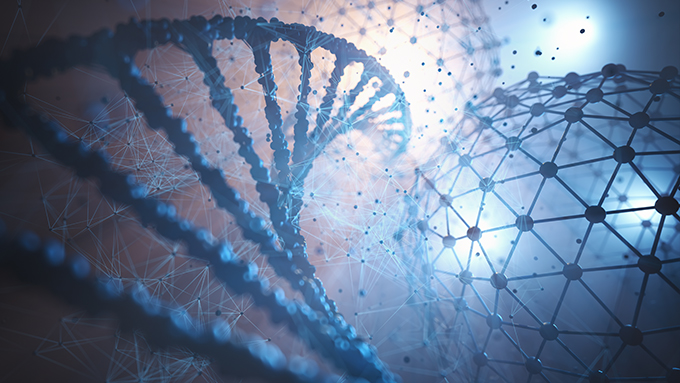 DNA-based molecular architecture
Chunhai Fan 中国科学院院士 Shanghai Jiao Tong University
Framework nucleic acids are a type of artificially designed structural nucleic acids whose size, shape, and mechanical properties can be programmatically controlled. They provide structural support for molecular recognition and serve as basic tools for the diagnosis and treatment of major diseases. The importance of framework nucleic acids in the field of biotechnology can be seen from the mechanism of nucleic acids in the transmission of genetic information. Nucleic acid testing technology has played a key role in the prevention and control of infectious diseases such as COVID-19 and Ebola, and has shown broad prospects in molecular tracking during the replication process within cells. The continuous breakthroughs in related technologies are injecting strong impetus into the development of life sciences.In addition, the application of DNA origami technology has also made significant progress in the storage of life information. Framework nucleic acids have great potential in the localization of drug molecules and the development of diagnostic tools. -
 Quantum Ionics: Ultra-low Energy Consumption of Energy Conversion/Information Transmission in Biologic System
Lei Jiang 中国科学院院士 Technical Institute of Physics and Chemistry of the Chinese Academy of Sciences
Learning from nature is an eternal theme in natural science. In this report, researcher Jiang Lei was inspired by the efficient energy conversion mechanism of living organisms and delved deeply into the connection between biological ion channels and efficient energy conversion in living organisms. He revealed the crucial role of ion channels in biological information storage and output, as well as the high efficiency of enzyme channels in the synthesis of life substances. These discoveries not only enhance our understanding of the intrinsic working mechanism of living organisms, but also provide a theoretical basis for the development of new efficient energy conversion materials and low-energy consumption artificial intelligence technologies. They are of great significance for promoting the development of life science and technological innovation. -
 Programmable Theragnostic Probes
Bin Liu 新加坡工程院院士 National University of Singapore
Stimuli-responsive theragnostic probes have emerged as powerful tools for integrated disease diagnosis and treatment. Among them, programable off–on–off systems represent a unique class of probes that undergo sequential activation and deactivation, enabling highly specific signal control and spatiotemporal precision. In this talk, we present the design and application of programmable theragnostic probes that are selectively activated by disease-associated biomarkers and subsequently deactivated upon therapeutic engagement or secondary stimuli. This reversible behaviour allows real-time monitoring of both pathological events and treatment progress. Building on this concept, we further developed a programmable singlet oxygen battery that enables deep-tissue disease treatment without relying on oxygen supply or light illumination, effectively overcoming the major limitations of traditional photodynamic therapy. -
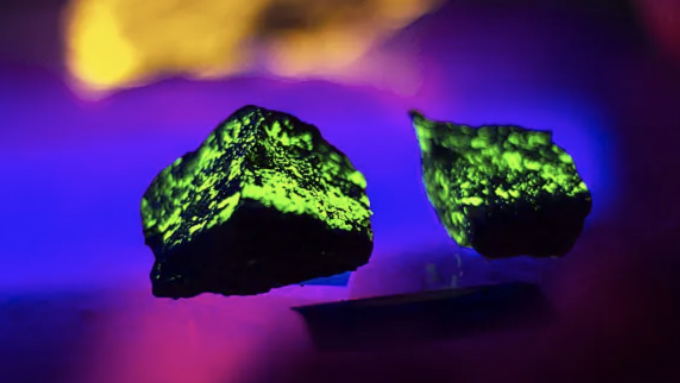 Assembling-Induced Organic Room-Temperature Phosphorescence
Xiang Ma 教授 East China University of Science and Technology
Functional dyes are widely used in optical recording, lighting display, biological imaging, medical diagnosis and treatment. It is still an important challenge to expand the luminescent properties and function regulation of fine chemical organic functional dyes, reduce the cost of material synthesis, and improve the economy of molecular material construction process. The construction strategy of "assembling-induced emission" is proposed to effectively regulate the fluorescence emission wavelength and room temperature phosphorescence efficiency of functional dyes and build functional and intelligent organic room temperature phosphorescence materials and product systems, which effectively expands the new functions and applications of traditional organic functional dye. -
 Coinage Metal Clusters: From Directed Synthesis to Functional Modulation
Shuang-Quan Zang 教授 Zhengzhou University
Metal clusters bridge atoms and nanoparticles as ideal models for studying structure–property relationships. However, ligand-protected coinage metal clusters (Au/Ag/Cu) often suffer from poor stability and weak emission, hindering precise synthesis of chiral, highly luminescent clusters. We developed site-specific modification and directed assembly to enhance stability and luminescence. We also established shell chirality control for efficient synthesis of enantiopure clusters, revealing shell-regulated electronic mechanisms that push luminescence efficiency toward the theoretical limit. Furthermore, we elucidated hierarchical chiral assembly mechanisms enabling exceptional circularly polarized luminescence (CPL), positioning these clusters among top CPL-active materials.
第203次:聚集体科学
论坛执行主席
-
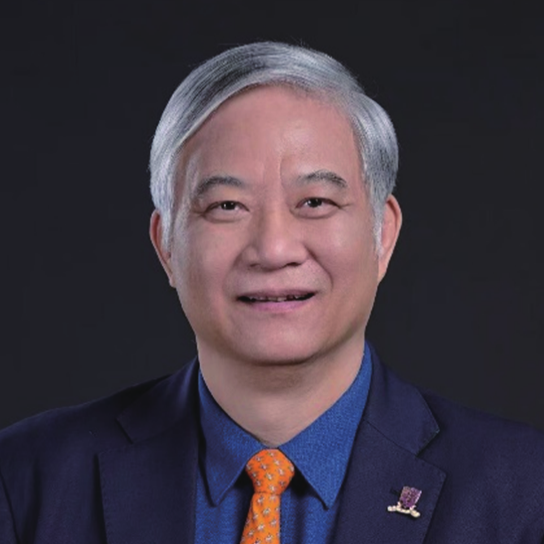 唐本忠院士
唐本忠院士
-
-
-
-
-
-
论坛日期:2025年11月21-22日
论坛地点:香港(香港中文大学)
承办单位:中国科学院学部学术与出版工作委员会
论坛摘要
聚集体科学作为化学、材料科学、生物、物理等学科交叉融合形成的前沿领域,近年来在聚集诱导发光、超分子组装、生物聚集体调控、功能软物质设计等方面取得了一系列突破性进展,展现出从基础研究到能源、医学、信息等关键领域应用的巨大潜力。然而,该领域在复杂聚集过程的动态机制解析、理论预测与精准构筑、微观结构与宏观功能的构效关系探索等方面仍面临深层挑战。为凝练学科核心方向、推动范式创新,于2025年11月21日至22日在香港中文大学召开了以“聚集体科学”为主题的科学与技术前沿论坛。论坛旨在系统探讨聚集体的形成机制、动态本质与功能涌现规律、聚集体范畴多类别材料及其多元应用,促进建立从分子到聚集体的可预测、可调控研究新范式。详情...
主题报告

主办单位:中国科学院学部学术与出版工作委员会
技术支持:中国科学院计算机网络信息中心
关于学术引领网站上的任何文字、图片、视频资料的使用必须经过中国科学院学部工作局的许可
© 1996 - 中国科学院 版权所有 京ICP备05002857号-1 京公网安备110402500047号
通讯地址:北京市海淀区中关村北一条15号(100190)
