
 首页
首页
-
 Time-Resolved Studies of Selected AIE Systems
David Lee Phillips 教授 The University of Hong Kong
We present some time-resolved spectroscopic studies for selected Aggregation-induced emission (AIE) systems to gain insight on their working mechanisms for the AIE processes in them.[1-3] First, we studied tetraphenylethylene (TPE)-based derivatives with varying structural rigidities and AIE characteristics were examined with. ultrafast time-resolved spectroscopy and computational studies and we discerned a direct correlation between the state-dependent coupling motions and inhibited fluorescence and confirmed the existence of photocyclized intermediates in them. This work found that the predominant non-radiative relaxation dynamics, i.e. formation of intermediate or rotation around the elongated C]C bond, induces the AIE effect, which is strongly structure-dependent but not related to structural rigidity and indicates AIE is a photophysical phenomenon correlated closely with the excited-state intramolecular motions. We next examined the nonaromatic annulene derivative of cyclooctatetrathiophene which displays a typical AIE effect in spite of its rotor-free structure.[2] This intriguing mechanism was studied with photoluminescence spectra, time-resolved absorption spectra, theoretical calculations, circular dichroism as well as by pressure-dependent fluorescent spectra etc., that indicate that the aromaticity reversal from ground state to the excited state serves to be the cause for inducing the excited-state intramolecular vibration, leading to the AIE effect in these systems. We then studied bifunctional AIEgens developed to directly deliver and visualize bioactive species together and discovered a novel photoactivatable nitric oxide (NO) donor with a built-in AIE fluorophore, that can rapidly release NO and AIEgen upon light irradiation. The ultrafast NO generation occurred in 2.1 ps, with a huge fluorescence turn-on AIEgen probe (300,000-fold intensity enhanced). Using this NO donor, real-time cell images of NO-releasing through the emission of AIEgen were successfully achieved through direct excitation of the donor in cells in situ. -
 Rational Design of Organic Fluorophores Highly Emissive in Both Molecularly Dispersed and Aggregated States
Tsuneaki Sakurai 教授 Kyoto Institute of Technology
Phenol derivatives containing a proton acceptor site at an ortho position are able to undergo excited-state intramolecular proton transfer (ESIPT). These derivatives isomerize from the enol form to the keto form upon photoexcitation, thereby allowing a four-level photophysical cyczwle––enol, enol*, keto*, and keto states. The fluorescence from the keto* form has advantages of the large Stokes shift and lack of self-absorption, contributing to the efficient photoluminescence in the aggregated state. In addition, the four-level cycle is suitable for the operation of low-threshold lasing. On the other hand, ESIPT fluorophores often have a drawback of low fluorescence quantum yields (ΦFL) in fluid media such as organic solvents and liquid crystals (LCs). 2-(2-Hydroxyphenyl)benzothiazole (HBT: Fig. 1), a representative ESIPT fluorophore, affords low ΦFL values in solution (~0.01), which is rationalized by the nonradiative decay process triggered by the twisting of the central C–C bond in the excited state. Here we demonstrate that a substitution of HBT with conjugated groups such as phenylene and ethynylene remarkably increases ΦFL in solutions and LCs. These derivatives are highly miscible in LCs and amorphous polymers over 10 wt%, which enables the polarized luminescence, amplified spontaneous emission, and microcavity laser. In this talk, rational molecular designs of not only ESIPT but also intramolecular charge transfer-based fluorophores will be introduced, featuring their excited-state planarization behavior. -
 OPA Chemistry: From Chemical Biology to Material Sciences
Xuechen Li 教授 The University of Hong Kong
Synthetic polymers constitute a cornerstone of modern functional materials, underpinning a wide range of applications from advanced coatings and membranes to biomedical devices and electronic components. The development of efficient polymerization strategies—particularly those featuring “clickable” or modular reactivity—is highly desirable, as it enables rapid diversification of polymer architectures and facilitates systematic exploration of structure–property relationships. We have recently developed a versatile and efficient synthetic platform for constructing isoindoline-1-one-based alternating copolymers via a novel mode of step-growth polycondensation. The process employs functionalized bis-ortho-phthalaldehyde and diamine monomers as building blocks, at room temperature under the cooperative catalytic action. This mild and operationally simple protocol affords high-molecular-weight linear copolymers with well-defined alternating sequences. A key advantage of this strategy lies in its modular design: by varying the linker segments in the monomer structures, a wide range of functional moieties can be seamlessly incorporated into the polymer backbone without altering the overall synthetic procedure. This tunability not only broadens the accessible chemical space but also streamlines the preparation of tailor-made materials for targeted applications. Beyond linear architectures, the methodology was readily extended to the construction of branched and crosslinked polymer networks by introducing multifunctional monomers—specifically, a triamine brancher and a dithiol crosslinker—into the polymerization system. These modifications produced materials with higher dimensional connectivity, imparting enhanced mechanical and thermal characteristics. Notably, several of the isoindoline-1-one-based copolymers exhibited thermoplastic elastomer behavior, combining elastic recovery with melt processability. -
 Organic Luminophores Based on Through-Space Conjugation
Haoke Zhang 教授 Zhejiang University
Traditional organic luminescent materials typically rely on through-bond conjugation (TBC) within rigid structures to promote π-electron delocalization, thereby achieving high fluorescence quantum yields and tunable emission wavelengths. However, in recent years, anomalous visible-light emission has been observed in non-TBC systems lacking π-electrons, such as polyethylene glycol and polyethylenimine, overturning the conventional understanding of organic luminescence mechanisms. To address this scientific challenge, our team has designed and synthesized a new class of multiarylalkane systems, systematically exploring a novel luminescence mechanism driven by through-space conjugation (TSC). In this talk, the underlying mechanism and structure–property relationships of TSC will be elaborated, followed by demonstrations of how this principle enables the construction of new organic luminophores, including the development of the smallest known near-infrared organic emitter to date. -
 Molecular Toolkits Development towards Precision Theranostics
Bengang Xing 教授 The Hong Kong Polytechnic University
Precision theranostics, as a key direction in the advancement of personalized medicine, is driving an integrated transformation in early disease detection, targeted molecular intervention, and dynamic therapeutic feedback. But so far, the realization of this vision remains highly challenging due to the intrinsic complexity of biological systems and the current lack of robust, precise molecular tools. The highly interdisciplinary chemical biology, bridging programmable chemistry and complex biology, offers unique advantages in addressing current challenges of new-generation medicines. By right, modern chemical biology is maturing into multifunctional toolboxes overflowing with customized molecular platforms, from disease-specific probes and intelligent imaging agents to function-oriented therapeutics. These tools drive entire continuum from deciphering disease mechanisms to conquering them, opening a new era of theranostics.Alongside advances in the field of Chemical Biology and building on nearly two decades of research, we have established an expansive chemical-biology arsenal that uncovers previously hidden mechanisms of pathogenesis by specific response toward disease biomarkers. Leveraging these tools, the team has engineered multimodal imaging platforms for accurate diagnosis and explored molecular therapeutics for targeted disease intervention, while their chemical approach also boosted rapid drug screening and scaffold optimization. These cutting-edge tools effectively bridge the gap between fundamental research and clinical translation, injecting new momentum into the advancement of integrated and translatable precision medicine.
第203次:聚集体科学
论坛执行主席
-
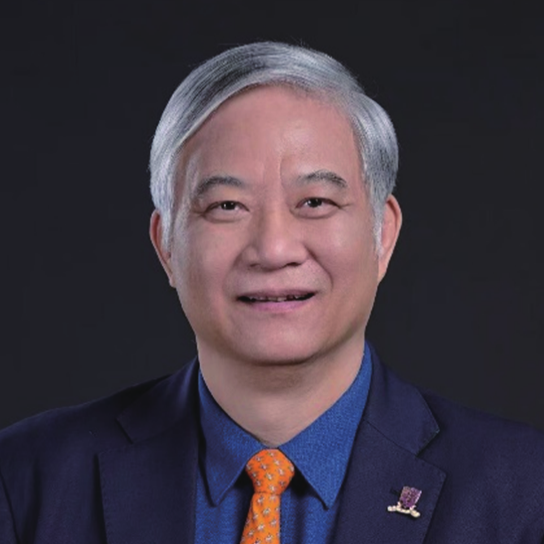 唐本忠院士
唐本忠院士
-
-
-
-
-
-
论坛日期:2025年11月21-22日
论坛地点:香港(香港中文大学)
承办单位:中国科学院学部学术与出版工作委员会
论坛摘要
聚集体科学作为化学、材料科学、生物、物理等学科交叉融合形成的前沿领域,近年来在聚集诱导发光、超分子组装、生物聚集体调控、功能软物质设计等方面取得了一系列突破性进展,展现出从基础研究到能源、医学、信息等关键领域应用的巨大潜力。然而,该领域在复杂聚集过程的动态机制解析、理论预测与精准构筑、微观结构与宏观功能的构效关系探索等方面仍面临深层挑战。为凝练学科核心方向、推动范式创新,于2025年11月21日至22日在香港中文大学召开了以“聚集体科学”为主题的科学与技术前沿论坛。论坛旨在系统探讨聚集体的形成机制、动态本质与功能涌现规律、聚集体范畴多类别材料及其多元应用,促进建立从分子到聚集体的可预测、可调控研究新范式。详情...
主题报告

主办单位:中国科学院学部学术与出版工作委员会
技术支持:中国科学院计算机网络信息中心
关于学术引领网站上的任何文字、图片、视频资料的使用必须经过中国科学院学部工作局的许可
© 1996 - 中国科学院 版权所有 京ICP备05002857号-1 京公网安备110402500047号
通讯地址:北京市海淀区中关村北一条15号(100190)
