
 首页
首页
-
 Phase-Separated Molecular Coacervates for Cytosolic Delivery and Disease Treatment
Jiang Xia 教授 The Chinese University of Hong Kong
Liquid-liquid phase separation (LLPS) of biomacromolecules such as proteins and nucleic acids has been widely found in the cytosol, forming coacervates, a.k.a. membraneless organelles, which compartmentalize the cells into different functional and structural regions. Interestingly, we found that low-molecular-weight compounds may form coacervates via LLPS in the aqueous solution. Surprisingly, some coacervates (we call molecular coacervates) may encapsulate and deliver proteins and nucleic acids across the plasma membrane into the cell. These unique features have inspired our team to explore the use of coacervates as delivery vehicles or transfection agents for proteins and nucleic acids. We then developed a range of coacervate-based technologies to treat diseases, with a focus on cancer immunotherapies. -
 Enhancing Bioimaging Clarity: The Synergy of Aggregation-Induced Emission and Nonlinear Optics
Tzu-Ming Liu 教授 University of Macau
Nonlinear optics (NLO) involves the interaction of light with matter in a nonlinear manner, leading to phenomena such as two-photon excitation, second-harmonic generation and third-harmonic generation. These techniques allow for deeper tissue penetration and reduced photodamage compared to traditional linear optical methods. Due to much confined excitation within a tiny focal volume, NLO techniques can provide high-resolution images of biological tissues, even at significant depths. Aggregation-induced emission (AIE) refers to a phenomenon where certain molecules, which are non-emissive in solution, become highly luminescent upon aggregation. This unique property is particularly advantageous for bioimaging because it reduces background noise and enhances signal intensity. The synergy between AIE and NLO can significantly improve bioimaging clarity. AIEgens can be designed to exhibit strong nonlinear optical properties, enabling their use in multiphoton excitation microscopy. This combination allows for the visualization of biological structures with high contrast and minimal background interference. Additionally, the photostability of AIEgens ensures that the imaging process can be sustained over extended periods without significant loss of signal. In this talk, I will elaborate our recent research progress on leveraging the unique properties of AIEgens and the advanced capabilities of NLO techniques to realize high-contrast three-dimensional vasculature imaging and highly sensitive detection of tumor biomarkers. -
 Photores Ponsive nanoassemblies for the treatment of cancer and eye disease
Weiping Wang 教授 The University of Hong Kong
Photores Ponsive drug delivery systems can enhance the accumulation of therapeutic agents at targeted sites where light is applied, thereby maximizing therapeutic efficacy while minimizing side effects. Currently, this strategy faces challenges in clinical applications, such as limited light penetration depth in biological tissues. In this talk, I will present our research on the development of simple photoresponsive nanoassemblies for the treatment of cancer and eye diseases. Additionally, I will discuss the approaches we have developed to overcome the challenge of limited light penetration within the body. By exploring these advancements and solutions, we aim to further the potential of photoresponsive nanomedicine in treating a wide range of diseases through interdisciplinary collaborations. -
 The Entangled Roles of Motion Restriction and Aggregation: Spectroscopic Challenges in Dye–Nucleic Acid Binding Equilibria Analysis
Tarita Biver 教授 University of Pisa
The interaction between small molecules - such as drugs or molecular sensors - and nucleic acids remains a central topic in chemical and biochemical research, due to its relevance across a wide range of systems and applications. These small molecules typically feature aromatic moieties, which promote interactions with nucleobases via π–π stacking and intercalation. This binding is also associated with the known “light switch” effect, resulting from restriction of intramolecular motion (RIM). Simultaneously, aromatic compounds often undergo self-aggregation, driven by the same π–π interactions. Spectrophotometric and spectrofluorometric analyses of such systems must therefore address the competition between dye-dye and dye-nucleobase interactions. The observed emission enhancement - whether due to RIM or aggregation-induced emission (AIE) - often reflects a complex interplay of overlapping phenomena. This complexity can hinder accurate interpretation of experimental data and the reliable extraction of binding constants. In this contribution, we present selected case studies from our research [1]-[7], highlighting critical challenges in data analysis and the evaluation of experimental errors. -
 Developing Fluorescent Probes for Biological Applications
Hongyan Sun 教授 City University of Hong Kong
Synthetic fluorescent probes have emerged as versatile tools that can help researchers to gain insight into the roles of biomolecules in various diseases. Designing and discovering selective chemical probes for biomolecules has become a topic of active investigation in recent years. In this talk, I will present several examples to illustrate how synthetic fluorescent probes are designed and utilized for biological investigation. HDACs play important roles in regulating various cellular functions. We have designed and synthesized a number of fluorescent probes for selective detection of the enzymatic activity of HDACs. The designed probes are capable of detecting HDAC activity in a continuous fashion, eliminating the extra step of protease cleavage. Further development of dual-function probe will not only enable reporting of enzymatic activity, but also allow us to identify and capture protein targets from the complex cellular environment. We have extended this strategy to detect enzymatic activity of decrotonylase, desuccinylase and demethylase, etc. In another study, we systematically investigated the rhodamine intramolecular spirocyclization switching mechanism and discovered new rhodamine fluorophores for super-resolution imaging. The fluorophores were successfully utilized for investigating mitochondria morphology change with nanoscale resolution. We envision that the continued evolution of synthetic probes holds promise for investigating the intricate cellular processes and advancing disease diagnosis and therapeutic development.
第203次:聚集体科学
论坛执行主席
-
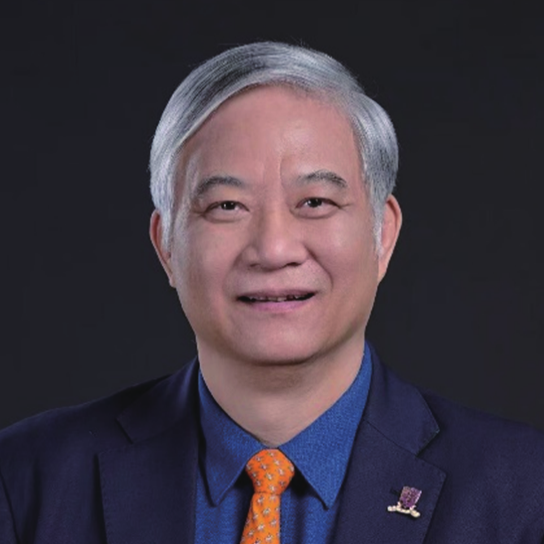 唐本忠院士
唐本忠院士
-
-
-
-
-
-
论坛日期:2025年11月21-22日
论坛地点:香港(香港中文大学)
承办单位:中国科学院学部学术与出版工作委员会
论坛摘要
聚集体科学作为化学、材料科学、生物、物理等学科交叉融合形成的前沿领域,近年来在聚集诱导发光、超分子组装、生物聚集体调控、功能软物质设计等方面取得了一系列突破性进展,展现出从基础研究到能源、医学、信息等关键领域应用的巨大潜力。然而,该领域在复杂聚集过程的动态机制解析、理论预测与精准构筑、微观结构与宏观功能的构效关系探索等方面仍面临深层挑战。为凝练学科核心方向、推动范式创新,于2025年11月21日至22日在香港中文大学召开了以“聚集体科学”为主题的科学与技术前沿论坛。论坛旨在系统探讨聚集体的形成机制、动态本质与功能涌现规律、聚集体范畴多类别材料及其多元应用,促进建立从分子到聚集体的可预测、可调控研究新范式。详情...
主题报告

主办单位:中国科学院学部学术与出版工作委员会
技术支持:中国科学院计算机网络信息中心
关于学术引领网站上的任何文字、图片、视频资料的使用必须经过中国科学院学部工作局的许可
© 1996 - 中国科学院 版权所有 京ICP备05002857号-1 京公网安备110402500047号
通讯地址:北京市海淀区中关村北一条15号(100190)
