
 首页
首页
-
 Chiral Plasmonic Nanoparticles
Jianfang Wang 教授 The Chinese University of Hong Kong
Chirality is ubiquitous in nature. Chiral plasmonic nanoparticles, which possess chiral features on their surfaces, have recently attracted much attention. They exhibit much stronger chiroptical responses than chiral molecules because of their larger sizes and localized surface plasmon resonances. We have developed seed-mediated recipes for the synthesis of chiral Au nanoparticles. The growth with Au nanodisks gives chiral Au nanotriskelions and helicoid Au nanocrystals. The average scattering dissymmetry factors of the L- and D-nanotriskelions reach +0.57 and −0.49 at 650 nm, respectively. The growth with Au nanodecahedrons gives chiral Au nanorods. We have further demonstrated the use of the chiral Au nanoparticles to realize circularly polarized organic light-emitting devices (CP-OLEDs). Efficient CP-OLEDs are realized through the assembly of chiral plasmonic Au nanoparticles and supramolecular aggregates. The chiral plasmonic nanoparticles serve as the chiral scaffold and chiral optical nanoantenna to modulate the circularly polarized absorption and emission of the supramolecular chromophores. The emissions of the OLEDs are dominated by either chiral excitons or chiral plasmons, dependning on the type of chiral plasmonic nanoparticle. The CP-OLED showing a high external quantum efficiency of 2.5% and a large dis-symmetry factor of 0.31 is achieved, as a result of multiscale chirality transfer, plasmonic enhancement, and the suppression of the overshoot effect. Previously reported CP-OLEDs generally exhibit an inverse relationship between the external quantum efficiency and the dis-symmetry factor. The CP-OLEDs fabricated in our work can achieve both high external quantum efficiencies and high dis-symmetry factors. The external quantum efficiencies of our devices are about two orders of magnitude higher than those of lanthanide-complex-based devices and the dis-symmetry factors are about two orders of magnitude larger than those of chiral cluster-based devices. -
 Engineering Aggregates in Organic Semiconductors
Qian Miao 教授 The Chinese University of Hong Kong
The solid-state aggregation of π-conjugated molecules critically influences the performance of organic semiconductors, as charge transport relies on intermolecular electronic coupling, which is determined by both molecular packing and the phase and nodal properties of frontier π-orbitals. This presentation covers two strategies for engineering such aggregates in organic semiconductors.The first strategy is molecular orbital engineering through a molecular substitution approach, enabling control over frontier orbital arrangement without altering molecular shape or crystal packing. Using N,N’-diethynylated derivatives of 6,13-dihydro-6,13-diazapentacene, we have demonstrated this strategy achieving field effect mobilities more than twice of those of their parent pentacene derivatives in organic field effect transistors (OFETs).The second strategy is to use curved π-molecules to access unconventional packing motifs inaccessible to planar frameworks. We highlight the unique π-stacking of a double helicene, which allows diverse functional groups to be introduced without disrupting π–π interactions, enabling high-performance chemical and biological sensors based on OFETs. -
 Microsystems for Personalised Medicine
Khoo bee luan 教授 City University of Hong Kong
Recent innovations in integrated microfluidic systems have advanced the frontier of personalized medicine by leveraging engineered aggregation phenomena to decode complex molecular behaviors. These developments enable the creation of microsystems that translate biological signals into actionable diagnostics tailored to individual health profiles. We present a handheld spinning platform with centrifugal microfluidics (HSP-CM)—a compact, electricity-free diagnostic microsystem designed for ultra-low-cost (~$1.40 USD) detection of urinary total protein (UTP), a key biomarker associated with disease-related protein aggregation. The HSP-CM integrates surface-engineered microchannels with tunable hydrophilic–hydrophobic properties, facilitating precise control over protein aggregation and reagent mixing during centrifugal activation. This personalised diagnostic tool provides rapid (~3 minutes), sensitive, and colourimetric quantification of UTP from minimal sample volumes (5 μL), achieving a detection limit of 3.49 μg/mL. Clinical validation across samples from healthy individuals and patients with myocardial infarction revealed a strong correlation (R = 0.9481) and agreement (90.32%) with conventional laboratory assays. By embedding aggregation science into a portable microsystem, HSP-CM exemplifies a new class of accessible, non-invasive diagnostics tailored for individualised health monitoring, particularly in resource-constrained environments. -
 Wet-chemical lattice engineering of metal nanocrystals towards enhanced catalytic properties
Ye Chen 副教授 The Chinese University of Hong Kong
Lattice engineering is an important approach to realize atomic-level surface control over metal nanostructures towards enhanced catalytic performances. However, precise engineering of the lattice of metal nanocrystals to control its crystal phase, surface defects, and lattice strains, particularly via wet-chemical methods, remains a key research challenge.[1,2] This talk will introduce some interesting discoveries we have recently made in engineering the crystal phase and surface defects of metal nanostructures with facet-specific characterizations and property studies.[3-5] The importance of phase dependency in catalysis and beyond will be highlighted. Insights to develop synthetic methodology towards precise lattice engineering will also be discussed. -
 AIE based Imaging Probes and Photosensitizers
Juyoung Yoon 韩国科学院院士 Ewha Womans University
The use of aggregation-induced emission luminogens (AIEgens) for imaging intracellular active molecules/biomolecules, and phototherapy has become an area of intense research. Recent contributions from our group for this topic will be presented; Supramolecular phthalocyanine assemblies-enhanced synergistic photodynamic and photothermal therapy guided by photoacoustic imaging, integrin-Targeted, Activatable nanophototherapeutics for immune modulation: enhancing photoimmunotherapy efficacy in prostate cancer through macrophage reprogramming, a hypoxia-triggered bioreduction of hydrophilic type I photosensitizer for switchable in vivo photoacoustic imaging and high-specificity cancer phototherapy.
第203次:聚集体科学
论坛执行主席
-
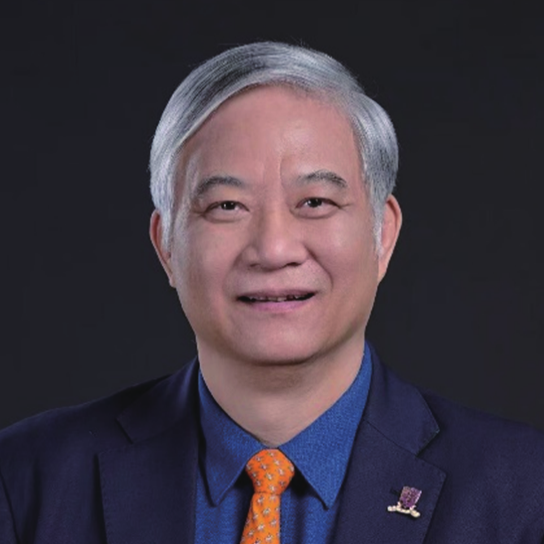 唐本忠院士
唐本忠院士
-
-
论坛日期:2025年11月21-22日
论坛地点:香港(香港中文大学)
承办单位:中国科学院学部学术与出版工作委员会
论坛摘要
聚集体科学作为化学、材料科学、生物、物理等学科交叉融合形成的前沿领域,近年来在聚集诱导发光、超分子组装、生物聚集体调控、功能软物质设计等方面取得了一系列突破性进展,展现出从基础研究到能源、医学、信息等关键领域应用的巨大潜力。然而,该领域在复杂聚集过程的动态机制解析、理论预测与精准构筑、微观结构与宏观功能的构效关系探索等方面仍面临深层挑战。为凝练学科核心方向、推动范式创新,于2025年11月21日至22日在香港中文大学召开了以“聚集体科学”为主题的科学与技术前沿论坛。论坛旨在系统探讨聚集体的形成机制、动态本质与功能涌现规律、聚集体范畴多类别材料及其多元应用,促进建立从分子到聚集体的可预测、可调控研究新范式。详情...
主题报告

主办单位:中国科学院学部学术与出版工作委员会
技术支持:中国科学院计算机网络信息中心
关于学术引领网站上的任何文字、图片、视频资料的使用必须经过中国科学院学部工作局的许可
© 1996 - 中国科学院 版权所有 京ICP备05002857号-1 京公网安备110402500047号
通讯地址:北京市海淀区中关村北一条15号(100190)
