
 首页
首页
-
 Aggregation Induced Emission of Copper Nanoclusters in Different Hosts
Andrey L. Rogach 教授 City University of Hong Kong
Ligand-coordinated noble metal nanoclusters, containing a couple to a few hundreds of atoms, bridge the gap between nanoparticles and molecular compounds. They show size-dependent fluorescence with a large Stokes shift, and are considered as rather environmentally benign. Compared to Au and Ag nanoclusters, elemental copper is significantly cheaper and is widely used in industries. Recently, thiol-stabilized Cu nanoclusters have attracted wide attention, and have been considered for several applications such as light emitting devices, chemical sensors, and biological imaging. Although the fluorescent properties of Cu nanoclusters are considered to be attractive, their photoluminescence quantum yields still need to be improved. This can be achieved by purposeful aggregation of these nanoclusters, either in solution or in different host matrices such as polymers, hydrogels and metal-organic frameworks, which allows us to make use of AIE effect as will be demonstrated in this talk. -
 Total Synthesis of Metallic Molecules
Jianping Xie 教授 National University of Singapore
Total synthesis, where desired organic- and/or bio-molecules can be produced from simple precursors at atomic precision and with known step-by-step reactions, has prompted centuries-lasting bloom of organic chemistry since its conceptualization in 1828 (Wöhler synthesis of urea). Such expressive science is also highly desirable in nanoscience, since it represents a decisive step towards atom-by-atom customization of nanomaterials for basic and applied research. Although total synthesis chemistry is less established in nanoscience, recent years have witnessed seminal advances and increasing research efforts devoted into this field. In this talk, I will discuss our recent work on introducing and developing total synthesis routes and mechanisms for atomically precise metal nanoclusters (and AIE-type luminescent metal nanoclusters). Due to their definite molecular formulae and unique molecule-like physicochemical properties (e.g., HOMO-LUMO transition, strong luminescence and stereochemical activity), atomically precise metal nanoclusters can be regarded as “metallic molecules”, holding potential applications in various practical sectors such as biomedicine, energy, catalysis, and many others. More importantly, the molecular-like properties of metal nanoclusters are sensitively dictated by their size and composition, suggesting total synthesis of them as an indispensable basis for reliably realizing their practical applications. -
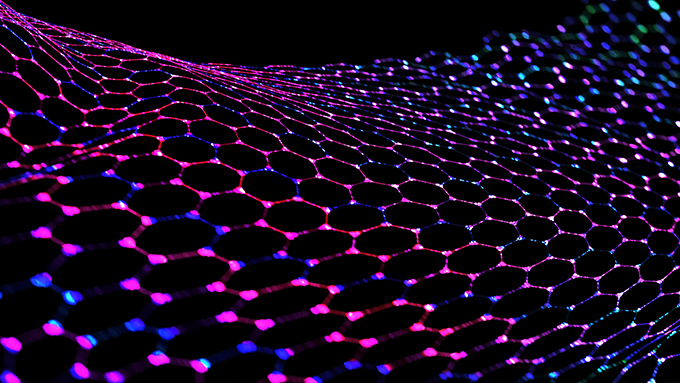 Engineering Two-Dimensional Materials through Chemical Vapor Deposition
Zhengtang Luo 教授 The Hong Kong University of Science and Technology
Photoluminescence (PL) in two-dimensional (2D) materials underpins quantum photonics and optoelectronics by revealing recombination kinetics and defect energetics. However, controllable defect-dominated peak shifts and deterministic tuning of the emission wavelength remain challenging to achieve in PL. Hence, we investigate PL engineering in 2DMs, including hexagonal boron nitride (hBN) and transition metal dichalcogenides (TMDs). First, an approach is developed for precise adjustment of the defect structure of hBN to achieve the modification of zero-phonon lines (ZPLs) in PL. By regulating the carbon concentration from 0.0005 at% to 0.082 at% in Cu substrates during chemical vapor deposition (CVD) process, we engineer the defect structure from CB (carbon substituted at the boron site) to C2B-CN (carbon doped into two boron sites and one nitrogen site) in hBN, which produces a specific shift in the ZPL from 600-610 nm to 630-640 nm. These adjustments in the emission spectrum are further supported by density functional theory (DFT) results, indicating alterations in the band structure, vibrational properties, and electronic transitions. Second, we show that controllable selenium-vacancy populations in molybdenum diselenide (MoSe2) modulates the excitonic PL peak position, enabling a well-defined distribution of exciton types and the dominated emission induced by defect bound excitons combination. Through the structured-defect modification and PL engineering, emission properties can be well-customized, opening avenues for incorporating advanced materials in on-chip quantum devices, representing a significant advancement in quantum computing. -
 Development of precise synthesis for inorganic 1 nm sized materials
Tetsuya Kambe 教授 Osaka University
1 nm sized materials with strong electronic interactions has drawn significant interest for its unique properties. The bottom-up synthesis enables the functionalization and property control. Here, I will present our research on the solution-phase synthesis of metal complex nanosheets, superatoms and borophene-oxide derivatives.Metal-complex nanosheets were synthesized by reacting metal ions and organic ligands at a biphasic interface.Their structures were revealed by XRD and electron microscopy measurements. These samples were found to exhibit two-dimensional conduction, while also possessing redox properties derived from the metal complexes. Superatoms were realized using dendrimers, a class of dendritic polymers. By controlling the number of metal atoms through coordination, clusters containing 13 atoms, as well as superatoms incorporating various elements, were successfully synthesized.A layered crystal composed of boron-based monolayer structures was also synthesized. Single-crystal structural analysis revealed alternating stacks of anionic oxidized borophene and potassium cations. Due to this ionic nature, the material could be dissolved in solvents, allowing the preparation of substances with thicknesses ranging from a single layer to several layers.Furthermore, it was discovered that this material exhibited liquid-crystalline functionality upon heat treatment. Unlike conventional organic liquid crystals, this system could operate over a broader temperature range.In addition, substitution of interlayer metal cations was achieved. By focusing on the mobility of these interlayer cations, we identified a function enabling significant enhancement of capacitance. -
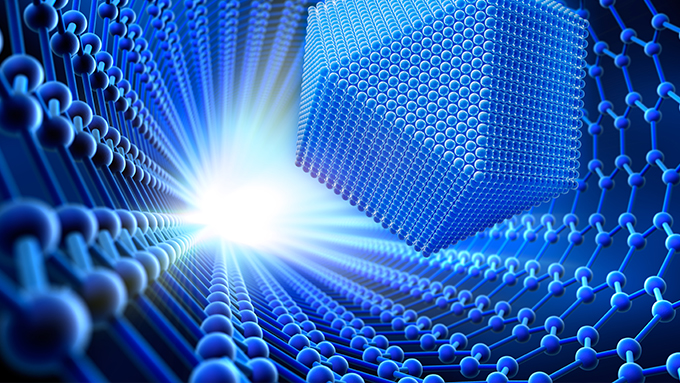 Emergence of optical properties in molecular materials - aggregation-induced emission and through-space interactions
Lluis Blancafort 教授 University of Girona
There is great current interest in understanding how the properties of molecules are modulated by aggregation, leading to the emergence of new properties at the molecular material level. We will review our Restricted Access to a Conical Intersection model to explain Aggregation-Induced Emission (AIE) and discuss how the combination of AIE and intramolecular through-space interactions results in the photophysical properties of molecular aggregates and crystals, producing unconventional emission.
第203次:聚集体科学
论坛执行主席
-
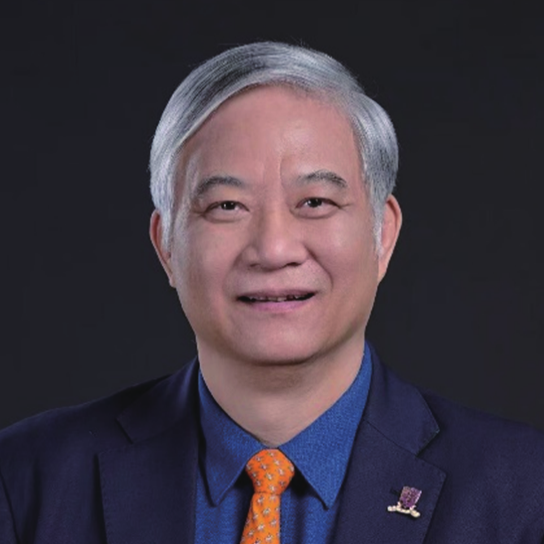 唐本忠院士
唐本忠院士
-
-
论坛日期:2025年11月21-22日
论坛地点:香港(香港中文大学)
承办单位:中国科学院学部学术与出版工作委员会
论坛摘要
聚集体科学作为化学、材料科学、生物、物理等学科交叉融合形成的前沿领域,近年来在聚集诱导发光、超分子组装、生物聚集体调控、功能软物质设计等方面取得了一系列突破性进展,展现出从基础研究到能源、医学、信息等关键领域应用的巨大潜力。然而,该领域在复杂聚集过程的动态机制解析、理论预测与精准构筑、微观结构与宏观功能的构效关系探索等方面仍面临深层挑战。为凝练学科核心方向、推动范式创新,于2025年11月21日至22日在香港中文大学召开了以“聚集体科学”为主题的科学与技术前沿论坛。论坛旨在系统探讨聚集体的形成机制、动态本质与功能涌现规律、聚集体范畴多类别材料及其多元应用,促进建立从分子到聚集体的可预测、可调控研究新范式。详情...
主题报告

主办单位:中国科学院学部学术与出版工作委员会
技术支持:中国科学院计算机网络信息中心
关于学术引领网站上的任何文字、图片、视频资料的使用必须经过中国科学院学部工作局的许可
© 1996 - 中国科学院 版权所有 京ICP备05002857号-1 京公网安备110402500047号
通讯地址:北京市海淀区中关村北一条15号(100190)
