
 首页
首页
-
 From Single Molecules to Molecular Aggregates
Zhen Li 教授 Wuhan University
To construct p-molecules with dfferent structures is one of the key points in the research field of opto-electronic materials. In many cases, the molecular structure not only affects the intramolecular-conjugation, but also the intermolecular p-p stacking, to result in the different functionalities. In this talk, some typical examples will be presented to partially demonstrate the interesting different properties with minor or even ignorable structural difference. -
 A New Era of Controlled Aggregates: Self-Assembly of Amphiphilic Random Copolymers
Takaya Terashima 教授 Kyoto University
Self-Assembly of amphiphilic polymers in water is promising to create precise yet dynamic micelles, hydrogels, and nanostructured materials. Recently, we have developed self-assembly systems of amphiphilic random or alternating copolymers carrying hydrophilic groups and hydrophobic groups as side chains in water or bulk/film state.In this paper, we report recent advances on the self-assembly of amphiphilic random/alternating copolymers as new strategies to create controlled aggregates and soft materials as follows: Precision self-assembly into micelles in waterTypically, amphiphilic random copolymers bearing poly(ethylene glycol) (PEG) and alkyl groups self-fold and/or intermolecularly assembled via the association of the hydrophobic groups into unimer or multichain micelles in water. The random copolymer micelles are approximately 10 nm and smaller than general block copolymer micelles. The size and aggregation number of the micelles can be controlled by the composition, degree of polymerization, and side chains. (2) Dynamic self-sorting micelles and hydrogels. Binary mixtures of different random copolymers form discrete multichain micelles via the self-sorting of their polymer chains or fused micelles via the co-self-assembly of the polymers. Those micelles further induce dynamic yet selective exchange of the polymer chains. Self-healing and selectively adhesive hydrogels can be prepared using such dynamic random copolymer micelles as physical crosslinking units.(3) Microphase separation into nanostructured materials. Amphiphilic random copolymers further induce pendant microphase separation into nanostructured materials/films. -
 Principles of AIE: Up-to-date Knowledge and New Horizons for Materials Science
Gen-ichi Konishi 教授 Tokyo Institute of Technology
In this lecture, I will present our study on the principles of AIE[1] and the horizons of materials science. I was fortunate to come across a new AIEgen, 9,10-bis(dialkylamino)anthracene. In studying this photophysical process, I was able to understand the following principles of AIE. “The AIE phenomenon requires control of the non-radiative decay (deactivation) pathway, that is, controlling the conical intersection (CI) on the potential energy surface enables the formation of fluorescent molecules (CI high) and non-fluorescent (CI low) molecules separately.” Then, based on this principle, I designed a new AIEgen called bridged stilbene. These AIEgens have unique properties and have been applied beyond AIE to the development of advanced materials. -
 Altering Noncovalent Interactions in Aggregates to Tune Fluorescence and Ionic Conductivity: Trnaslating Fluid-Phase Properties to the Solid State
Paul R. McGonigal 教授 University of Oxford
Organic aggregate packing balances noncovalent interactions to control photoluminescence and ionic conductivity. We revealed how pressure tunes the packing and electronic structure of perphenyl chromophores, establishing structure–property relationships for rotor-like fluorophores. We also demonstrated counterion-controlled aggregation of ionic chromophores in solution. Furthermore, we designed diffusely charged aromatic cations that enable state-independent halide conductivity. -
 Development for New AIEgens Based on Hypervalent Complexes
Kazuo Tanaka 教授 Kyoto University
Our group has also reported hypervalent tin-fused azobenzene (TAz) compounds (Figure 1) [1‒3]. From a series of mechanistic studies, it has been clarified that the coordination of the N atom to the tin atom and the electron donation from the O atom to the π- system simultaneously caused stabilization of the lowest unoccupied molecular orbital energy level and elevation of the highest occupied molecular orbital energy level, achieving a narrow energy gap. Moreover, TAz can formed stable higher-coordinated structures, which changed the electronic state and the absorption and emission wavelengths. However, the planar structure of the π-planes of TAz caused critical aggregation-caused quenching. In this study, we attempted to give excitation-driven property to hypervalent tin compounds to develop aggregation-induced emission molecules showing emission in the longer wavelength region only in the solid state [4]. We focused on azomethine structure, which allows to be introduced substituents at the C=N position. The steric hindrance originating from the substituent causes distortion in the molecule and promotes intramolecular vibration. Based on this idea, we designed and synthesized three types of hypervalent tin-fused azomethine compounds with different substituents (H, Me, and Ph) and explored researched the differences in optical properties derived from the substituents. Furthermore, we attempted to application to thermal sensors using the polymers containing the hypervalent tin-fused azomethine units compounds in the backbone.
第203次:聚集体科学
论坛执行主席
-
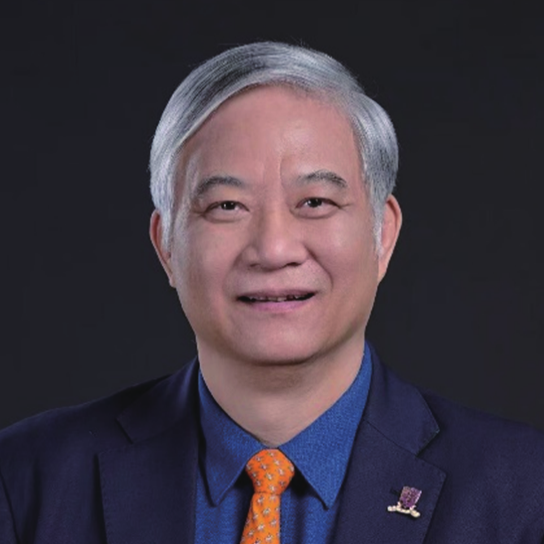 唐本忠院士
唐本忠院士
-
-
-
-
-
-
论坛日期:2025年11月21-22日
论坛地点:香港(香港中文大学)
承办单位:中国科学院学部学术与出版工作委员会
论坛摘要
聚集体科学作为化学、材料科学、生物、物理等学科交叉融合形成的前沿领域,近年来在聚集诱导发光、超分子组装、生物聚集体调控、功能软物质设计等方面取得了一系列突破性进展,展现出从基础研究到能源、医学、信息等关键领域应用的巨大潜力。然而,该领域在复杂聚集过程的动态机制解析、理论预测与精准构筑、微观结构与宏观功能的构效关系探索等方面仍面临深层挑战。为凝练学科核心方向、推动范式创新,于2025年11月21日至22日在香港中文大学召开了以“聚集体科学”为主题的科学与技术前沿论坛。论坛旨在系统探讨聚集体的形成机制、动态本质与功能涌现规律、聚集体范畴多类别材料及其多元应用,促进建立从分子到聚集体的可预测、可调控研究新范式。详情...
主题报告

主办单位:中国科学院学部学术与出版工作委员会
技术支持:中国科学院计算机网络信息中心
关于学术引领网站上的任何文字、图片、视频资料的使用必须经过中国科学院学部工作局的许可
© 1996 - 中国科学院 版权所有 京ICP备05002857号-1 京公网安备110402500047号
通讯地址:北京市海淀区中关村北一条15号(100190)
