首页
首页
主题报告
-
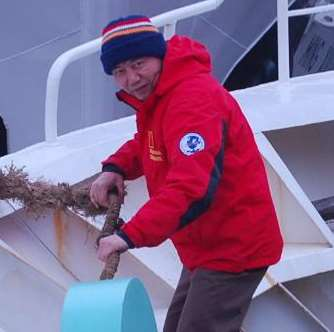
 Influence of river runoff on the ecosystem of the coastal area of Eastern Kamchatka
Pavel Yu. Semkin 研究员 俄罗斯科学院太平洋海洋研究所
Catchment areas on volcanic territories in different regions are of great interest since they are enriched with nutrients that contribute significantly to coastal ecosystems. The Kamchatka Peninsula is one of the most active volcanic regions of the world;however, to date, the chemistry of its river waters and the state of its coastal ecosystems remain understudied in connection with volcanism. In this study, we report high concentrations of DIP and P org in the Kamchatka River comparable to many rivers in urbanized areas with sewerage and agricultural sources of nutrients. A distinct increase in DIP, P org , and DSi is systematically manifested in all seasons, especially in spring and summer, in the area directly influenced by the Kliuchevskaya group of volcanoes and Shiveluch Volcano. This feature is directly related to snow melting in the river valley and on the slopes of volcanoes that were covered with ash—a source of nutrients. We believe that DIP, P org , DSi, DIN, and N org fluxes in river runoff from volcanic catchment areas in east Kamchatka are a major trigger for spring and summer phytoplankton blooms and subsequent high zooplankton biomass, using Kamchatka Gulf as an example. This study demonstrates the connection between nutrient fluxes from a catchment area and the formation of seasonal phytoplankton blooms and high zooplankton biomass in the coastal area. We also study seasonal, year-to-year, and climatic variability of water discharges and hydrometeorological conditions to understand how nutrient fluxes can change in the foreseeable future and influence coastal ecosystems. -
 Carbon transport and acidification of the north Pacific subtropical mode water
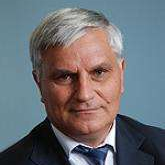
祁第 教授 集美大学
The formation and movement of North Pacific Subtropical Mode Water (NPSTMW) play a crucial role in carbon absorption, transport, and storage. Through field observations and carbon isotope tracer analysis, we reveal the process of anthropogenic carbon transport via mode water circulation and finds that the acidification of mode water has accelerated over the past decade. The primary driver is the cooling of source water in the mode water formation region, which enhances the accumulation of anthropogenic carbon. Within the range of 137°E-149°E, all mode water shows evidence of anthropogenic carbon accumulation and accelerated acidification, largely controlled by mode water's role in carbon transport. Furthermore, carbon isotope tracer analysis indicates that the accelerated accumulation of anthropogenic carbon in mode water can be traced back to the surface waters of the formation region. The consistency of this accumulation rate in both vertical and horizontal dimensions suggests that mode water retains the fingerprint of anthropogenic carbon throughout its formation and transport. These findings deepen our understanding of carbon transport, storage, and acidification mechanisms in the North Pacific, providing a scientific basis for assessing the ecological effects of ocean acidification in this region.