
 首页
首页
-
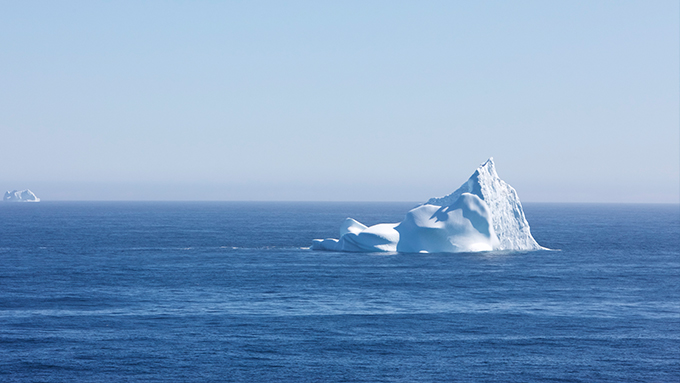 Impacts of extreme events on Arctic climate variability
陈显尧 教授 中国海洋大学
Arctic sea ice is declining rapidly in response to global anthropogenic warming. However, climate model simulations consistently predict lower rates of Arctic Sea ice decline than observations, even though there have numerous efforts on improving the models' capability on the simulations of positive feedback processes such as sea ice-ocean coupling, surface radiative forcing and sea ice-albedo. Here we present several evidences on the accumulated impacts of extreme events in the Arctic on the sea ice variability during the global warming. We show that for the lack of simulations of extreme events in the Arctic Ocean, climate models are difficult to capture their cumulative effects on the sea ice retreat. Our results suggest the need to enhance the ability of climate models to simulate or parameterize extreme events to improve the ability to simulate the rapid retreat of sea ice. -
 Late Quaternary environmental evolution of the Sea of Japan and its controlling mechanisms
石学法 研究员 自然资源部第一海洋研究所
The Sea of Japan is a unique semi-enclosed marginal sea in the Northwestern Pacific. Through collaboration of China and Russia, systematic studies were conducted on several sediment cores from the Sea of Japan. These studies reveal that various regions within the Sea of Japan experienced significant changes during the Late Quaternary, in terms of terrigenous sources detrita, surface hydrology, vertical water mass structure, deep-water ventilation, sea-ice activity, and surrounding terrestrial vegetation, occurring at both orbital and millennial timescales. The research identified the timing of the Tsushima Warm Current intrusion into the Sea of Japan and reconstructed its paleoenvironmental evolution history. It was found that the environmental evolution of the Sea of Japan is primarily controlled by three factors: eustatic sea level, the East Asian monsoon, and the Tsushima Warm Current. However, different regions of the Sea responded differently to these factors. The eustatic sea level acts as the first-order factor influencing the environmental evolution of the Sea of Japan, directly affecting the degree of exchange and material transport between the Sea of Japan and surrounding waters. The East Asian summer monsoon impacts the surface hydrology of the Sea of Japan and the vegetation evolution of the surrounding land, while the East Asian winter monsoon influences sea-ice activity in the western part of the Sea of Japan and vertical convection of the deep water masses. Since 8,000 years ago, both the Tsushima Warm Current and the Liman Cold Current have become important factors influencing the environmental evolution of the Sea of Japan. This study highlights the complex interplay of various climatic and oceanographic factors in shaping the environmental changes of this region, providing valuable insights into how these factors interact and influence each other over long periods. -
 Spatial differentiation variability of the sea ice and icebergs, hydrology and productivity in the Sea of the Okhotsk over the last 130 ka, linkages with the North Pacific Intermediate Water formation, Kamchatka glaciation and atmosphere circulation
Sergey A. Gorbarenko 研究员 俄罗斯科学院太平洋海洋研究所
Despite the intensive studies of the Okhotsk Sea paleoceanography during the last 30 years, its southeastern part remains poorly studied compared to other parts. However, southeastern sea segment seems present extremely important area for investigation of the northwestern Pacific paleoceanography and evolution of the Kamchatka Peninsula glaciation in the past. When the southward flowing East Kamchatka Current, main current of NW Pacific, passes the peninsula, a significant part of its water turns and enters the Sea of Okhotsk and northward moved as West Kamchatka Current. According to paleogeographical investigation, the currently existed mountain-valley glaciers of Kamchatka significantly increased in volume and space and extended beyond the coastline during glaciations, dumping icebergs into the sea from the eastern and southwestern sides of Kamchatka peninsula. Probability of the episodic impact of iceberg discharges from southwestern Kamchatka into the southeastern Okhotsk Sea during glaciations was earlier suggested by Sakamoto and Nurnberg. Here we provide new isotope-geochemical, lithological and productivity results from the southeastern core 9-1 and overview earlier published similar data from seven sediment cores, recovered in the other parts of sea and one from the northwestern Pacific. Comparison of these data allow to analyzed spatial changes of the sea ice formation and periodic iceberg discharges from Kamchatka into the sea and clarify evolution of the North Pacific Intermediate water and possible origin behind them during global climate change. Deviation of δ18O of benthic foraminifera Uvigerina spp. of used cores (δ18OUv) from benthic LS16 stack show millennium scale variability of North Pacific Intermediate water formation. Deviation of δ18O of planktic foraminifera N. pachyderma(s.) of used cores (δ18ONp) from benthic LS16 stack provide sequence of millennium scale episodically iceberg discharge from Kamchatka into the sea, nearly synchronously with enhancement of intermediate water formation. The lithological and productivity parameters of sediment from southeastern cores markedly differ from ones from the western and central parts during last glaciation and were punctuated by abrupt and large IRD rises at the millennial scale over the relative warm Marine Isotope Stages 3. Spatial distribution of δ18OUv records show increases of North Pacific Intermediate water formation in the Bering and Okhotsk seas nearly during cold Dansgaard-Oeschger stadials,forced by significand atmosphere circulation reorganization. Spatial distribution of δ18ONp,IRD and productivity records documents nearly coeval icebergs discharges events into the southeastern part of sea from the Kamchatka glaciers. -
 Depositional and circulation changes at the Chukchi margin, Arctic Ocean, during the last two glacial cycles
肖文申 副教授 同济大学
The shallow Chukchi-East Siberian margin of the Arctic Ocean was repeatedly impacted by Pleistocene glaciations and related changes in sea level and circulation. The depositional history across the last two Arctic glacial cycles is investigated in sediment core ARC6-C15 from the foot of the Chukchi Rise, an extension of the Chukchi Sea shelf that was impacted by the East Siberian Ice Sheet (ESIS). Our proxy data indicate a large extent of the ESIS, likely blocking the westward sediment transport from the Laurentide Ice Sheet (LIS) during the penultimate glaciation estimated to have occurred within an age span from Marine Isotope Stage (MIS) 4 to 6. The deglacial environments are characterized by enhanced sediment inputs from the East Siberian and Chukchi shelves, while overlying interstadial/interglacial sediments have a signature of the Chukchi Sea and the Beaufort Gyre. During the last glaciation, the ESIS had a smaller impact on the Chukchi margin, and the deglaciation was dominated by the LIS sediment sources. Glacial discharge from the Mackenzie area is identified in the Bølling/Allerød interval, while later deglacial pulses can be tracked to the Canadian Arctic Archipelago. In addition to glacigenic sediment inputs, both deglacial intervals contain Fe-Mn micronodules, possibly formed under the influence of meltwater pulses during sea level rise. An increase in the chlorite content that likely marks the flooding of the Bering Strait is identified at the start of the Holocene. A pronounced oxygen and carbon isotope excursion in the early Holocene may indicate hydrographic changes in the Arctic Ocean related to the 8.2 ka meltwater discharge event. -
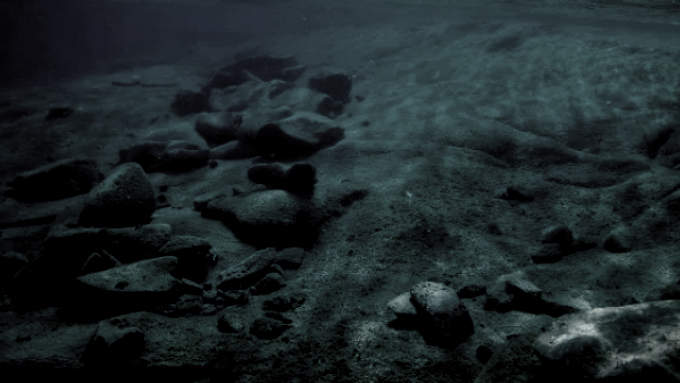 The role of organic matter distribution in gray sedimentary strata of the Lomonosov Ridge’s Siberian slope (Arctic Ocean) in deciphering depositional conditions
Yuriy P. Vasilenko 研究员 俄罗斯科学院太平洋海洋研究所
This study addresses the problem of lithostratigraphy in the bottom sediments of the Siberian slope of the Lomonosov Ridge. It examines in detail the conditions and mechanisms governing the formation of gray layers, typically associated with glacial periods, and demonstrates how these layers can accumulate during interglacial intervals. Currently, the color characteristics of bottom sediments serve as one of the key factors in the stratigraphy of the Arctic sedimentary cover. Their use assumes that during interglacial periods and prolonged interstadials, brown—predominantly dark brown—layers of bottom sediments accumulate in the deep-water part of the Arctic Ocean, whereas glacial periods are marked by the deposition of gray, olive-gray, and beige sediments. This color differentiation across glacial cycle stages is attributed to the influx of manganese into the sediments. A significant portion (more than half) of the manganese is delivered to the Arctic basin via riverine input. During glacial phases, this input was drastically reduced, and a portion of the manganese became sequestered on the vast exposed shelves. In contrast, during interglacial phases, riverine discharge increased substantially, leading to greater manganese influx. An additional contributing factor is the remobilization of manganese accumulated on the shelves during glacial periods under interglacial transgression conditions. However, our data indicate that the gray layers in the sedimentary cover of the Siberian slope of the Lomonosov Ridge most likely formed at the beginning of interglacial periods. This pattern has been observed in the region for at least the last 120,000 years.
第195次:西北太平洋的气候变化与生态系统
论坛执行主席
-
 张经院士
张经院士
-
 Grigory I. Dolgikh院士
-
-
-
-
-
论坛日期:2025年4月15-16日
论坛地点:北京西郊宾馆1号楼2层第五会议室
承办单位:中国科学院地学部、中国科学院学部学术与出版工作委员会
论坛摘要
主题报告

主办单位:中国科学院学部学术与出版工作委员会
技术支持:中国科学院计算机网络信息中心
关于学术引领网站上的任何文字、图片、视频资料的使用必须经过中国科学院学部工作局的许可
© 1996 - 中国科学院 版权所有 京ICP备05002857号-1 京公网安备110402500047号
通讯地址:北京市海淀区中关村北一条15号(100190)
