
 首页
首页
-
 Continental shelf as an important sink of climate-sensitive trace metals
陈天宇 教授 南京大学
Continental shelves are dynamic regions at the land-ocean interface that function as both sources and sinks of climate-sensitive trace metals. However, the net fluxes of trace metals, both into and out of these shelf systems, remain poorly constrained. To date, our understanding has been largely limited to a few trace metals, such as iron and manganese, and has focused predominantly on the shelves acting as sources of those trace metals to the open ocean. We will review the current state of knowledge, highlight the challenges in measuring and modeling these fluxes, and focus on our studies on the role of continental shelf as an important sink of several climate-sensitive trace metals. Addressing the role of continental shelf in oceanic trace metal budget is essential for accurately predicting how trace metal cycling—and its associated impacts on marine ecosystems and climate feedbacks—will respond to ongoing environmental change. -
 Reflection of global orbital and millennial changes of hydrology and climate of the northwestern Pacific in the radiolarian record of sediment core from the Tenji Seamount over the last 88 kyr
Elena A. Yanchenko 研究员 俄罗斯科学院太平洋海洋研究所
The sediment samples for radiolarian analysis (76 samples) were taken in the upper part of core LV76- 18-1, recovered from the Tenji Seamout at depth of 2863m (Northwestern Pacific). We observed 301 radiolarian taxa in the samples: 128 taxa from 56 genera of Spumellaria, 165 taxa from 66 genera of Nassellaria, and 8 taxa from 2 genera of Collodaria. Records of total radiolarian abundance and its accumulation rates (fluxes) over the 88 kyr are presented. Here we also used earlier published age model of studied core, data of δ18O of planktic foraminifera and δ18O of benthic foraminifera, lithological (IRD) and productivity proxies (Ba-bio, CaCO3 and total organic content) of sediments from the Okhotsk Sea and NW Pacific cores. Records of the total radiolarian abundance and its fluxes) clearly demonstrate millennium scale changes over the last 88 kyr. On order to understand reasons behind them, we reconstruct temporal variability of the North Pacific Intermediate Water at millennium scale in the past by comparison of the δ18O of benthic foraminifera Uvigerina spp. of earlier published cores from the Sea of Okhotsk and northwestern Pacific (δ18OUv) with benthic LS16 stack. Larger deviation of the δ18OUv these cores from benthic LS16 stack indicate increased formation of the North Pacific Intermediate Water, which bring into water column the water with lower δ18O values from surface. Comparison of the total radiolarian abundance and its accumulation rates with constructed variability of the North Pacific Intermediate Water demonstrate decreases of the radiolarian abundance and accumulation rates with enhancement of North Pacific Intermediate Water, which bring into water column the water with depleted nutrient concentration from surface. Mostly, these periods with decreased of the radiolarian abundance and accumulation rates/ enhancement of North Pacific Intermediate had occurred coeval with the Heinrich Stadials. Abrupt increases of radiolarian abundance and its accumulation rates, following after its drop during the North Pacific Intermediate Water intensification, mainly occurred during long-lasted Dansgaard-Oeschger Interstadials. -
 Processes controlling spatiotemporal dynamics of the sinks and sources of CO2 in the Far Eastern seas
Pavel Ya. Tishchenko 研究员 俄罗斯科学院太平洋海洋研究所
The carbonate system was studied in different areas of the Sea of Japan and Sea of Okhotsk by measuring pH using a cell without liquid junction in the Pitzer's pH scale and measuring total alkalinity using the Bruevich's technique. The processes controlling the spatial and temporal dynamics of CO2 sinks and sources are discussed for the areas of the Sea of Okhotsk and Sea of Japan: Amur River, Sakhalin Bay, Shantar's bays, open sea and Razdolnaya River, southwestern part of Peter the Great Bay, open sea, respectively. During the period when the rivers are not covered with ice, the annual CO2 emission to the atmosphere as a result of respiration process in the rivers is 2.5×10⁴ tC and 4.5×10⁶ tC by Razdolnaya R. and Amur R., respectively. As result of weathering and photosynthesis processes, the annual CO2 consumption from the atmosphere is -4.7×10⁴ tC and -3.8×10⁶ tC by ecosystems of Razdolnay R. and Amur R., respectively. River-dominated Ocean Margins – Amursky Bay (Sea of Japan) and Sakhalin Bay (Sea of Okhotsk) – were considered. Due to nutrient inputs from rivers and intensive photosynthesis, a biological pump which carries organic matter to the seafloor is formed, leading to seasonal hypoxia in the Amursky Bay and to the formation of the feeding area for gray whales on the Eastern Sakhalin Slope. The Ocean-dominated Margins – southwestern part of the Peter the Great Bay (Sea of Japan) and Shantar's Bays (Sea of Okhotsk) were considered. The southwestern part of Peter the Great Bay becomes a sink for atmospheric CO2 after the seasonal upwelling event which supply nutrients. The water exchange between the Shantar's bays and the Sea of Okhotsk is piling up nutrients to the bays. The Shantar's Bays act as the sink for atmospheric CO2 due to photosynthesis and cooling processes occurring in spring, while most of the area of the bays acting as the source of the CO2 to the atmosphere through respiration and heating processes occurring in late summer. Based on underway observations most surface water along of the ship route in the Sea of Okhotsk is acting as the sink of atmospheric CO2 through photosynthesis and as the source of CO2 to the atmosphere in the Bussol Straight area due to intense vertical mixing. Observations showed that the north part of the Sea of Japan is a source of CO2 to the atmosphere due to heating process in summer and deep convection in winter. The southern part of the Sea of Japan is a sink of atmospheric CO2 due to photosynthesis and cooling processes. In general, the Sea of Japan reveals negative CO2 emission in the period 1999 – 2014 due to global eutrophication caused by atmospheric NO2 pollution. -
 Chinese coastal ecosystem in the climate changing environment
孙松 研究员 中国科学院海洋研究所
The Chinese coastal ecosystem, a vital zone of ecological and economic significance, faces escalating pressures under climate change and human activities. This study examines the ecological dynamics of China's coastal regions, emphasizing the interaction between climate-driven stressors and anthropogenic activities. Heat waves, ocean acidification, hypoxia and imbalance of nutrients have exacerbated ecological disasters, including harmful algal blooms (red tides), large-scale green algae (e.g., Ulva prolifera) bloom, and jellyfish blooms, which disrupt biodiversity, fisheries, and coastal livelihoods. Concurrently, the rapid expansion of aquaculture has strained ecological carrying capacity, with overexploitation of resources and nutrient pollution further degrading water quality and habitat integrity. We will evaluate the ecological capacity and healthy condition of key coastal zones, revealing declining resilience due to combination of climate impacts and unsustainable practices. Case studies highlight regions such as the Bohai Sea, Yellow Sea, and East China Sea, where eutrophication and hypoxia threaten marine ecosystems and aquaculture productivity. Mitigation strategies, including integrated coastal zone management, nutrient load reduction, and climate-adaptive aquaculture practices, are proposed to enhance sustainability. By synthesizing climatic, ecological, and socioeconomic data, this study underscores the urgency of balancing economic development with ecological preservation to safeguard China's coastal ecosystems in a warming world. -
 The ecosystem and physicochemical environment change of continental marginal seas
刘素美 教授 中国海洋大学
Continental marginal systems are undergoing rapid transformations driven by anthropogenic activities and climate change. A comprehensive understanding of environmental, ecological, and economic interactions is crucial for optimizing ocean resource utilization and management strategies. Insights gained from multidisciplinary syntheses and inter-regional comparative studies of coastal socio-ecological systems will enhance the rationalization and optimization of marginal seas management. The Chinese marginal seas, particularly the Bohai Sea, serve as pivotal case studies for examining the impacts of multiple stressors on ecosystems and social dynamics. Surrounded by land regions experiencing rapid population growth and economic development, these coastal waters face intense human-induced pressures, exacerbating the stress on marine ecosystems already affected by climate change. The ecological environment of the Bohai has undergone significant changes due to multiple stressors, including climate change (rising temperatures, declining river discharge) and human activities (reclamation, urbanization, industry, agriculture). These have increased sea temperature and salinity, reduced winter sea ice, intensified summer stratification, and altered coastlines through reclamation for aquaculture and construction. Sediment from the river has further disrupted tidal regimes and fragmented fish habitats. In response, stringent reclamation policies and the "Grain-for-Green" program have been implemented to mitigate damage. Nutrient shifts from agricultural practices, wastewater discharge, and seasonal river fluxes highlight the need for robust pollution control and long-term monitoring. Overfishing and environmental changes have reduced fishery resources, with large species replaced by smaller ones. While summer fishing bans and stock enhancement aid recovery, integrated measures—pollution control, habitat protection, and restoration—are crucial for long-term ecosystem restoration.
第195次:西北太平洋的气候变化与生态系统
论坛执行主席
-
 张经院士
张经院士
-
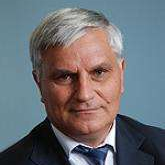 Grigory I. Dolgikh院士
-
-
-
-
-
论坛日期:2025年4月15-16日
论坛地点:北京西郊宾馆1号楼2层第五会议室
承办单位:中国科学院地学部、中国科学院学部学术与出版工作委员会
论坛摘要
主题报告

主办单位:中国科学院学部学术与出版工作委员会
技术支持:中国科学院计算机网络信息中心
关于学术引领网站上的任何文字、图片、视频资料的使用必须经过中国科学院学部工作局的许可
© 1996 - 中国科学院 版权所有 京ICP备05002857号-1 京公网安备110402500047号
通讯地址:北京市海淀区中关村北一条15号(100190)
