
 首页
首页
-
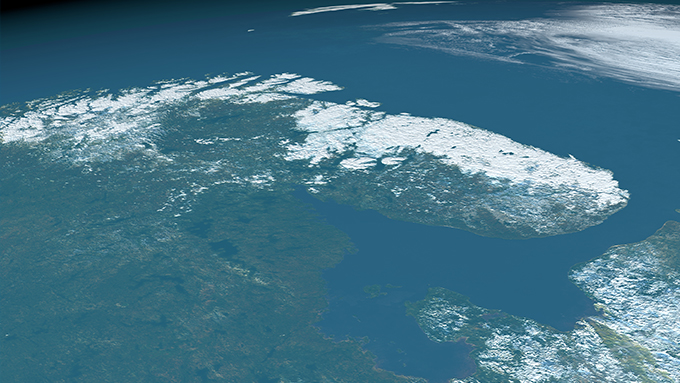 Subarctic frontal zone in the western Pacific and mesoscale water dynamics
Vyacheslav B. Lobanov 研究员 俄罗斯科学院太平洋海洋研究所
Confluence zone of Kuroshio and Oyashio to the east of Japan is known as subarctic frontal area of the Northwestern Pacific. Because of high spatial gradients of temperature and salinity this area is considered as one of the most important energy-active zones of the World Ocean, where vertical fluxes between ocean and atmosphere as well as horizontal fluxes of heat, salt and momentum are extremely strong. In addition to meandering flow of Kuroshio Extension mesoscale eddies are important drivers of water dynamics and material exchange across the front. Highly energetic anticyclonic eddies, known as Kuroshio warm-core rings, are formed to the north of the main stream and transport trapped warm and saline subtropical water far to the north. POI observations demonstrated that KWCR may travel more than 4 years and reach area of central Kuril Islands. Joined studies with Canadian (in 1990 th ) and Japanese (in 2000s) colleagues confirmed close relation of the Kuril eddies with warm-core rings of Kuroshio. It was also demonstrated a complicated vertical structure of the eddy with, in some cases, a few cores of trapped water. Such structure influences on vertical motion in the eddy and thus on nutrients and carbon fluxes as well as on primary production and biological species distribution. Strong cyclonic eddies are formed from southward elongated meanders of Kuroshio Extension and provide cross-frontal transport of cold and less saline subarctic mode water into subtropical area. They are less studied in compare with anticyclonic rings but no less important in terms of heath, energy and material transport. Our recent studies of the Kuroshio rings are associated with Fukushima-1 NPP incident in 2011 and recent discharge of accumulated water to understand which part of this water may reach Russian waters and with what content of radioisotopes. POI cruises of 2023-2024 proved slightly higher tritium concentration in the main stream of Kuroshio Extension and the eddies. However it was close to natural level. No notable excess of tritium was found. -
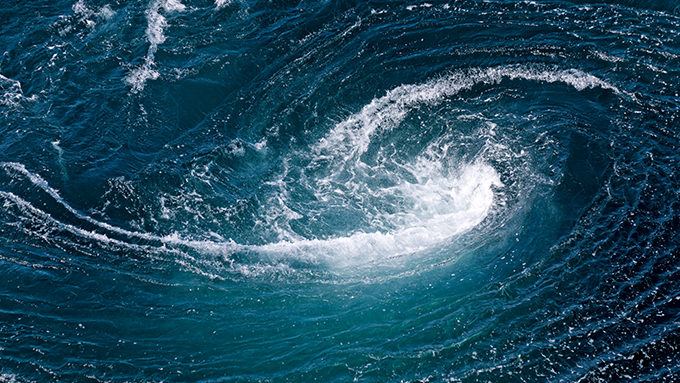 New insights on ocean eddies and their impacts
陈大可 中国科学院院士 自然资源部第二海洋研究所
Mesoscale eddies are one of the most prominent and energetic physical phenomena in the world ocean, and thus have attracted a great deal of attention and research efforts over the last half of a century. Here we first briefly review the history of eddy studies, the important roles of eddies in ocean dynamics, and the hot topics in this research field. Then, based on observational data, numerical experiments and theoretical analysis, we report some recent progress on ocean eddy research, especially the new insights on the eddy’s abnormal structure and movement, the eddy-induced transport and mixing, and the impact of eddies on general ocean circulation. Finally, we discuss the long-standing challenge in observing the three-dimensional structure of submesoscale eddies, and provide a possible solution based on an intelligent swift ocean observing system. -
 Current trends and regional characteristics of interannual variability in thermal conditions and salinity fields in the Pacific subarctic in the context of ongoing global warming and intensification of the hydrological cycle
Elena V. Dmitrieva 研究员 俄罗斯科学院太平洋海洋研究所
Current global warming has a significant impact on the climate systems of the ocean and atmosphere, causing a restructuring of large-scale planetary processes, atmospheric and oceanic circulation and complex changes in the characteristics of the natural environment. Under these conditions, accumulation of excess heat and its redistribution in the ocean water column, accelerated changes in salinity on the sea surface and in the water column, caused by the intensification of the global water (hydrological) cycle, are observed. The observed climate response includes an increase in the frequency, intensity and magnitude of the impacts extreme temperatures, marine heat waves (MHWs), heavy precipitation, droughts and tropical cyclones on various natural ecosystems and economic sectors.Using climate data from the National Oceanic and Atmospheric Administration (USA), Roshydromet, and atmospheric reanalysis from the European Weather Forecast Center, trends and regional features of interannual changes in water and air temperature, heat content, salinity, and salt content of waters in the Pacific subarctic, Far Eastern seas, East Asian seas, and the Pacific and Indian oceans over the past 4 decades have been determined. An analysis of the three-dimensional structure of trends in hydrological characteristics and cause-and-effect relationships between the conditions of their formation and large-scale and regional processes in the ocean and atmosphere has been performed. In the last 4 decades the highest warming rate within the study area was observed in the extratropical zone of the NW Pacific, and contribution of the trend to the total variance of the average annual sea surface temperature reached 30–40%. Trends in temperature and salinity change vary significantly across layers and climate zones. In the last two decades, in the subarctic waters of NW Pacific increase in the heat content of the upper 1000-meter layer by ~3% was accompanied by a statistically significant decrease in the salinity of this layer. In the NE Pacific, there was an increase in the heat content of this layer by ~2%, accompanied by a statistically insignificant decrease in salinity. Changes in the characteristics of the marine heat waves show significant positive trends and confirm a steady increase in these phenomena in terms of the frequency of events, their duration, intensity and integral indicators, emphasizing significant regional differences in these indicators over the past decades. Statistically significant correlations were revealed between fluctuations in various MHWs indicators and changes in the characteristics of surface air temperature anomalies, the height of the geopotential of the 500 mb isobaric surface, and climate indices. -
 The multi-scale variations of subsurface cold water mass in subarctic Pacific Region
于非 研究员 中国科学院海洋研究所
Firstly, we used a mooring system to investigate the seasonal variation of subsurface cold water mass in Bering Sea and analyze the variation of subsurface cold water mass in the whole subarctic Pacific. In Bering Sea, the near-surface water is highly stratified due to surface warming and the remaining cold winter water in the subsurface layer, downward propagation of wind-generated NIWs is reported for the first time by the mooring system. It is found that in summertime the energetic wind-generated NIWs are constrained to the region of strong near-surface stratification, whereas in wintertime the NIWs can propagate into deep depths. This phenomenon is important for understanding NIW-induced mixing, upward heat transfer, and sea-ice melting in the subarctic and the broader Arctic Ocean. -
 Lagrangian oceanography: observations, simulation and practical issues
Sergei V. Prants 俄罗斯科学院院士 俄罗斯科学院太平洋海洋研究所
The new Lagrangian approach is developed to study transport, mixing, eddies and fronts in the ocean. It is based on calculation of relevant Lagrangian indicators which are functions of trajectories of virtual particles advected in the altimetry-based velocity field, outputs of numerical circulation models and reanalysis. In this approach, the relevant indicators of water motion are computed to provide information on the origin, advection history, 'age' and other properties of water masses. We review the achievements and limitations of the Lagrangian diagnostics. The Lagrangian approach allows us not only to identify, track real mesoscale eddies and to document 'biography' of each eddy anywhere in the ocean, both retrospectively and in the near-real time. In particular, we can estimate the fractions of water masses/types the eddy's cores consist of. Using this approach and automatic eddy detection algorithm, a census of the mesoscale eddies in the northwestern Pacific have been done in the altimetry era. The ocean fronts are characterized by a confluence of waters with different properties. These features promote aggregation of nutrients, phytoplankton and zooplankton contributing to creation of oases of marine life in the oceanic desert for marine habitants, from small pelagic fish to seabirds and top predators. We have applied this approach for capturing frontal features based on extraction of Lagrangian fronts in chaotic oceanic flows with the focus on their role for fisheries. The location of Lagrangian fronts can be calculated in the real time with satellite-derived velocity fields under any weather conditions and in the areas with small contrasts of sea surface temperature. The proximity of fishing ground for different species to location of the fronts is shown with the help of statistical tests in different seas and oceans based on numerous catch reports of fishing vessels. These results may help in avoiding the risk of overfishing and bycatch. We also emphasize the importance of fronts in marine ecology, sustainable fisheries and in making decisions on the organization of marine protected areas. Transport barriers in the oceanic flows are considered from the point of view of dynamical systems theory. Special attention is paid to discussion of importance of transport barriers in some practical issues such as anthropogenic (oil spills, radionuclides etc.) and natural pollution.
第195次:西北太平洋的气候变化与生态系统
论坛执行主席
-
 张经院士
张经院士
-
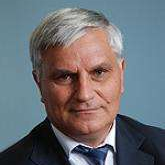 Grigory I. Dolgikh院士
-
-
-
-
-
论坛日期:2025年4月15-16日
论坛地点:北京西郊宾馆1号楼2层第五会议室
承办单位:中国科学院地学部、中国科学院学部学术与出版工作委员会
论坛摘要
主题报告

主办单位:中国科学院学部学术与出版工作委员会
技术支持:中国科学院计算机网络信息中心
关于学术引领网站上的任何文字、图片、视频资料的使用必须经过中国科学院学部工作局的许可
© 1996 - 中国科学院 版权所有 京ICP备05002857号-1 京公网安备110402500047号
通讯地址:北京市海淀区中关村北一条15号(100190)
