
主旨报告
Keynote Lectures分组1:空间天文
Parallel Session1:Space Astrophysics分组2:空间物理
Parallel Session2:Space Physics
中国空间科学卫星计划的进展与展望
China's Space Science Activities
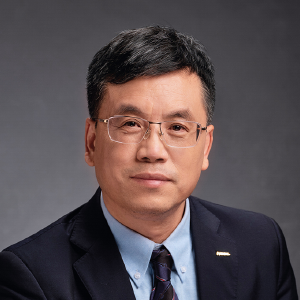
王赤 WANG Chi
中国科学院国家空间科学中心 National Space Science Center, CAS本报告介绍中国空间科学卫星计划近年来取得的重要进展,"悟空"号开展暗物质粒子探测,"墨子"号首次开展空间尺度量子科学实验,"慧眼"是我国首个空间X射线天文望远镜,"羲和""夸父"竞相逐日, “天关”卫星发现256亿光年外天体及新型暂现源,中国空间科学呈现多点突破的发展趋势。展望未来,我国空间科学计划锚定《国家空间科学中长期发展规划(2024-2050年)》,聚焦极端宇宙、时空涟漪、日地全景、宜居行星、太空格物五大科学主题,系统部署科学任务。通过自主创新与国际合作,持续产出深化宇宙认知的原创成果,推动人类空间科学共同进步。
This report outlines the significant progress achieved by China's space science satellite program in recent years. The WuKong satellite has conducted dark matter particle detection; the Mozi satellite pioneered quantum science experiments on space scale; the Huiyan satellite became China's first space-based X-ray astronomical telescope; the Xihe and KuaFu missions have advanced solar exploration; and the Tianguan satellite detected celestial objects 25.6 billion light-years away and discovered new types of transient sources. These accomplishments reflect a trend of breakthroughs across multiple domains in China's space science .
Looking ahead, China's space science initiatives are aligned with the National Space Science Medium- and Long-Term Development Plan (2024–2050), focusing on five major scientific themes: Extreme Universe, Spatio-temporal Ripples (e.g., gravitational wave detection), Sun-Earth Panorama, Habitable Planets, and Space Matter Exploration. The plan systematically deploys scientific missions through three phases up to 2050.Through independent innovation and international collaboration, China aims to generate original scientific breakthroughs that deepen humanity's understanding of the universe and foster global progress in space science.
王赤,中国科学院国家空间科学中心主任,中国科学院院士,国际宇航科学院院士。长期从事空间物理和空间天气研究,现担任探月工程四期首席科学家、太阳风-磁层相互作用全景成像卫星(SMILE)中方首席科学家。曾获国家科技进步特等奖、钱学森杰出贡献奖、中国地球物理学会科技进步一等奖等。
WANG Chi, Director General of the National Space Science Center of the Chinese Academy of Sciences (CAS), Academician of the Chinese Academy of Sciences, and Academician of the International Academy of Astronautics. He has long been engaged in space physics and space weather research. He currently serves as the Chief Scientist for the fourth phase of China's Lunar Exploration Program and as the Chinese Chief Scientist for the Solar wind-Magnetosphere-Ionosphere Link Explorer (SMILE) mission. His awards include the National Special Prize for Scientific and Technological Progress, the Qian Xuesen Outstanding Contribution Award, and the First Prize of Scientific and Technological Progress from the Chinese Geophysical Society, among others.