
主旨报告
Keynote Lectures分组1:空间天文
Parallel Session1:Space Astrophysics分组2:空间物理
Parallel Session2:Space Physics
SJ-10返回式科学实验卫星:开创我国空间微重力科学研究新篇章
SJ-10 Recoverable Scientific Experiment Satellite: Opening a New Chapter in China's Microgravity Science Research in Space
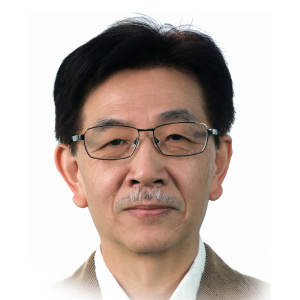
康琦 KANG Qi
中国科学院力学研究所 Institute of Mechanics,CAS实践十号返回式卫星(SJ-10)是我国首颗专门用于微重力与空间生命科学研究的实验卫星。卫星于2016年4月6日在我国酒泉卫星发射中心发射,其中卫星返回舱在轨工作12天后与卫星留轨舱分离,携带空间材料科学和空间生命科学实验载荷及样品在我国四子王旗着陆场成功回收;卫星留轨舱继续在轨工作8天完成了全部预定的微重力流体与燃烧科学实验。卫星共搭载了10项微重力实验载荷和9项空间生命实验载荷,在轨成功开展了全部28项科学实验任务。空间实验取得了多项重大原创性突破,如:1)得到颗粒气体类气液相分离相图并创建了颗粒(气液)相分离机理的微观结构与动力学模型;2)首次建立环形大曲率流体热对流体系并验证了中国学派热对流失稳体积效应理论的普适性;3)首次实现纯熵驱条件下液晶相形成机制的实验验证及多因素协同作用下粒子输运动力学和组装行为;4)首次揭示火焰传播模式的完整图谱及空间环境中多参量耦合作用下非金属材料的可燃性;5)发现了微重力条件促进骨髓间充质干细胞肝向诱导分化;6)首次实现哺乳动物胚胎空间发育等。空间实验项目发表学术论文约300篇,邀请/大会报告100余篇(次),并由Springer Nature和科学出版社联合在海内外出版发行高度创新研究类专著 2 部。SJ-10为我国微重力科学的发展起到了积极的推动作用,开启了我国批量开展空间微重力科学实验研究的新篇章。
The SJ-10 recoverable satellite is China's first experimental satellite dedicated to microgravity and space life science research. The satellite was launched from the Jiuquan Satellite Launch Center in China on April 6, 2016. After 12 days of in-orbit operation, the satellite's return capsule separated from the satellite's orbiting capsule and successfully landed at the Siziwangqi Landing Site in China, carrying payloads and samples for space material science and space life science experiments; the orbiting capsule continued to work in orbit for another 8 days and completed all the planned microgravity fluid and combustion science experiments. The satellite carried 10 microgravity experimental payloads and 9 space life science experimental payloads, and successfully conducted all 28 scientific experimental tasks in orbit. The space experiments achieved several major original breakthroughs, such as: 1) Obtaining the phase diagram of granular gas-like gas-liquid phase separation and establishing the microscopic structure and dynamic model of the granular (gas-liquid) phase separation mechanism; 2) Establishing for the first time a large-curvature annular fluid thermal convection system and verifying the universality of the volume effect theory for thermal convection instability proposed by the Chinese school; 3) Realizing for the first time the experimental verification of the liquid crystal phase formation mechanism under pure entropy-driven conditions, as well as the particle transport dynamics and assembly behavior under the synergistic effect of multiple factors; 4) Revealing for the first time the complete map of flame propagation modes and the flammability of non-metallic materials under the coupling effect of multiple parameters in the space environment; 5) Discovering that microgravity conditions promote the hepatic differentiation of bone marrow mesenchymal stem cells; 6) Achieving for the first time the space development of mammalian embryos. The space experiment project has published approximately 300 academic papers and more than 100 invited/conference reports. Additionally, two highly innovative research monographs have been jointly published and distributed at home and abroad by Springer Nature and Science Press. SJ-10 has played a positive role in promoting the development of China's microgravity science and opened a new chapter for China to carry out large-scale space microgravity scientific experimental research.
康琦,中国科学院力学研究所研究员。国际宇航联微重力科学专业委员会成员,中国空间科学学会理事、《空间科学学报》副主编,国家重点研发计划引力波专项项目首席,“实践十号”微重力科学实验卫星科学应用系统总师、“太极一号”空间引力波技术实验卫星科学应用系统总师,中国空间站流体物理实验柜科学及载荷责任专家,完成了10余次空间科学与技术实验,发表学术论文200余篇,获国家五部委颁发的“载人航天突出贡献者”荣誉以及国务院政府特殊津贴专家等。
KANG Qi, Professor of Institute of Mechanics, Chinese Academy of Sciences (CAS). Member of the Microgravity Sciences and Processes Committee, International Astronautical Federation (IAF). Director Member of the Chinese Society of Space Research, and Deputy Editor of “Chinese Journal of Space Science”. The project chief of gravitational wave special project under the National Key Research and Development Program. The chief engineer of the scientific application system for the "Shijian-10" microgravity science experiment satellite and the "Taiji-1" space gravitational wave detection experiment satellite, and the PI & PD of the scientific experiment system of the Fluid Physics Rack (FPR) of the Chinese Space Station (CSS). Carried out more than 10 space science and technology experiments and published over 200 academic papers. Obtained the award of "Outstanding Contributor to Manned Spaceflight" issued by five government ministries and administrative agencies, as well as the Government Special Allowance Expert from the State Council.