
主旨报告
Keynote Lectures分组1:空间天文
Parallel Session1:Space Astrophysics分组2:空间物理
Parallel Session2:Space Physics
利用地磁卫星探测地球发电机与海洋信号
Probe the Geodynamo and Oceans via Geomagnetic Satellites
Keke ZHANG
Macau University of Science and TechnologyThe MSS-1 (Macau Science Satellites-1) twin satellites were successfully launched on 21 May 2023 into a nearly circular low-inclination (41 degree) orbit at an altitude of about 450 km: Satellite A carries a payload of high-precision magnetometers to accurately measure Earth's magnetic field while Satellite B is equipped with other sensors such as a solar X-ray instrument to obtain space environmental data. The MSS-2 twin satellites, marked by strongly eccentric polar orbits forming the MSS constellation of geomagnetic survey satellites, are scheduled to launch in the year of 2028. We report using the geomagnetic field accurately measured by the MSS-1 geomagnetic satellite to probe the convection-driven geodynamo and the spatial-temporal structure of Earth's oceans movement.
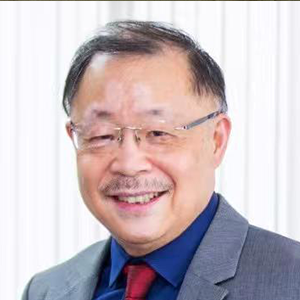
Keke ZHANG(张可可)教授是澳门科技大学讲座教授、副校长兼澳门空间技术与应用研究院院长。他担任"澳门科学一号"卫星科学与应用系统的首席科学家及总设计师,主要研究领域涵盖地球与空间科学,以及地磁理论及其应用。张教授是美国地球物理学会会士和英国皇家天文学会会士,曾于2000年获国家杰出青年科学基金,2013年获英国皇家天文学会成就奖,2020年获澳门特区政府科学技术奖一等奖,2024年入选全球前0.5%顶尖科学家榜单。2025年,他荣获国际地磁学与高空大气物理学协会(IAGA)最高科学奖项"沈括奖",以表彰其在地球发电机理论、地核波动研究和澳门科学卫星任务中的贡献,成为首位获此殊荣的亚洲科学家。
Professor Keke ZHANG is a Chair Professor, Associate Vice President of Macau University of Science and Technology, and Director of the Macau Institute of Space Technology and Application. He serves as the Chief Scientist and Chief Designer of the Science and Application System for the "Macau Science Satellite-1". His main research areas include Earth and space sciences, as well as geomagnetic theory and its applications. Professor Zhang is a Fellow of American Geophysical Union (USA) and Royal Astronomical Society (UK). He received the National Science Fund for Distinguished Young Scholars Fund Award in 2000, the Royal Astronomical Society Achievement Award in 2013, the First Prize of the Macau SAR Government Science and Technology Award in 2020, and was listed among the top 0.5% of global scientists in 2024. In 2025, he was awarded the Shen Kuo Award, the highest scientific honor from the International Association of Geomagnetism and Aeronomy (IAGA), in recognition of his contributions to geodynamo theory, core wave studies, and the Macau science satellite mission—marking the first time an Asian scientist has received this prestigious award.