
主旨报告
Keynote Lectures分组1:空间天文
Parallel Session1:Space Astrophysics分组2:空间物理
Parallel Session2:Space Physics
LISA/太极/天琴与类GRACE任务联合数据分析的科学产出潜力
Potential Science Output from Joint Data Analysis of LISA/Taiji/Tianqin and GRACE-like Missions
Gerhard HEINZEL
Albert Einstein InstituteTwo mission classes in gravitational physics share much technology: LISA/Taiji/Tianqin for astrophysics and GRACE-like for Earth and climate observation. Both the West and China are pursuing both types of missions. In both cases, operating two constellations at the same time and performing joint data analysis leads to an overproportional gain in the science output. I will briefly introduce the mission concepts and present plans and then examine the potential improvements of the results by coordinated use of multiple constellations.
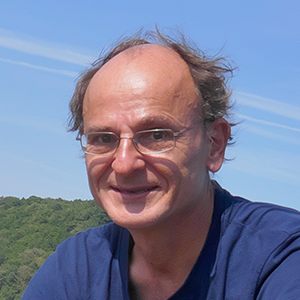
Gerhard HEINZEL教授1964年出生于德国南部,曾在汉诺威大学和加兴的马克斯·普朗克量子光学研究所(MPQ)攻读物理学,1999年获汉诺威大学博士学位,其课题聚焦用于地基引力波探测器的实验激光干涉测量技术。在日本完成两年博士后研究(1999-2001年)后,他始终任职于汉诺威的马克斯·普朗克引力物理研究所(AEI),期间创建并领导"空间激光干涉测量"团队。该团队在LISA探路者号与GRACE后续星任务中开创性激光干涉仪的设计中发挥核心作用,并为LISA任务的干涉测量技术贡献了多项关键成果。在其指导下,该团队已培养出40余名博士研究生。他在相关领域及电子学与信号处理方面发表大量学术论著,并担任VIRGO、LIGO引力波探测器及天琴计划的技术顾问。在转攻物理学之前,他曾获德国学术交流中心(DAAD)和中国政府奖学金,于1986/87年在山东济南研修汉学与日本学。二十余年来,他与中国学术界保持持续合作,参与太极计划、天琴等重大项目,并通过马克斯·普朗克学会与中国科学院(MPG-CAS)的LEGACY合作框架与中国科学院多家研究所开展交流。
Prof. Gerhard HEINZEL, born 1964 in South Germany, has studied Physics in Hannover and at the MPQ in Garching and obtained his Ph.D. from Hannover in 1999 about experimental laser interferometry for ground-based GW detectors. After a two-year Post-Doc in Japan (1999-2001), he is since then working in the Max Planck Institute for Gravitational Physics (AEI) in Hannover, where he has built up and led the "Laser interferometry in space" group, which was central to the design of the groundbreaking laser interferometers on LISA Pathfinder and GRACE Follow-On and contributed many key ingredients to the LISA interferometry. More than 40 Ph.D. thesis have come out of this group under his supervision. He is author or co-author of numerous papers on these topics as well as electronics and signal processing. He served as technical advisor to the VIRGO and LIGO gravitational wave detectors and Tianqin. Before Physics, he studied Sinology and Japanolgy including one year in Jinan, Shandong (1986/87) with a scholarship of the DAAD and the Chinese government. He has been in continuous contact with Chinese colleagues since more than 20 years, including both the Taiji and Tianqin projects, as well as CAS institutes in the context of the LEGACY MPG-CAS collaboration.