
主旨报告
Keynote Lectures分组1:空间天文
Parallel Session1:Space Astrophysics分组2:空间物理
Parallel Session2:Space Physics
探索极端宇宙:从“慧眼”卫星到eXTP天文台
Exploration of the Extreme Universe: from Insight-HXMT satellite to eXTP observatory
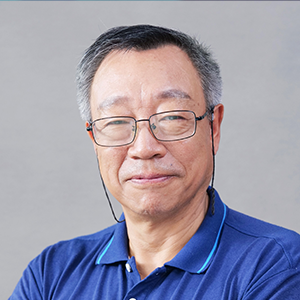
张双南 ZHANG Shuangnan
中国科学院高能物理研究所 Institute of High Energy Physics, CAS近年来,中国已成功发射并运行了包括“慧眼”-HXMT(中国首颗X射线天文卫星)在内的多个空间天文项目,开启了探索极端宇宙的征程。然而,关于极端宇宙的诸多关键科学问题仍有待解决。这些问题包括与极端引力、极端密度和极端磁场相关的课题,它们将由计划于2030年代初发射的增强型X射线时变与偏振天文台(eXTP) 空间天文台来着力研究。eXTP任务将搭载一组功能强大的X射线望远镜,具备前所未有的同时进行X射线能谱、时变与偏振测量的能力,用以观测宇宙中的黑洞、中子星和极端爆发现象,从而探索在常规天体物理环境中或地球实验室里无法企及的极端物理条件下的天体物理过程和基本物理规律。eXTP将是时域天文学和多信使天文学时代的强大X射线天文台。
In recent years, China has launched and operated several space astronomy missions including Insight-HXM, China’s first X-ray astronomy satellite, embarking on a journey to explore the extreme universe. Nevertheless, numerous key scientific questions about the extreme universe remain to be solved. These include problems related to extreme gravity, extreme density, and extreme magnetic fields which will be addressed by the enhanced X-ray Timing and Polarimetry (eXTP) space observatory to be launched in early 2030. The eXTP mission will carry aan array of powerful X-ray telescopes with unprecedented capabilities in simultaneous X-ray spectro-timing-polarimetry capabilities to observe black holes, neutron stars and extreme explosions in the universe, in order to explore the astrophysics and fundamental physics under extreme physical conditions, which are not available in the normal astrophysical environments or accessible on the earth. eXTP will be a powerful X-ray observatory in the era of time-domain and multi-messenger astronomy.
张双南,中国科学院高能物理研究所研究员。入选国家基金委杰青、教育部长江特聘教授、国家海外高层次人才等。获得赵九章优秀中青年科学奖、中国科学院杰出科技成就奖、国家科技进步奖、国防科技创新奖和北京市自然科学奖等。发表论文5百多篇,引用超过2万5千篇。担任中国天宫二号伽马射线偏振探测项目、慧眼天文卫星、eXTP空间天文台、中国空间站高能宇宙辐射探测实验和伽马射线偏振探测2号项目等空间科学项目首席科学家。
ZHANG Shuang-Nan, Professor at the Institute of High Energy Physics (IHEP), Chinese Academy of Sciences (CAS). Selected for the National Science Fund for Distinguished Young Scholars (NSFC), appointed as a Changjiang Distinguished Professor by the Ministry of Education, and recognized by the National Overseas High-level Talent Program, among other honors. Recipient of the Zhao Jiuzhang Outstanding Young and Middle-aged Scientist Award, CAS Outstanding Science and Technology Achievement Prize, National Science and Technology Progress Award, National Defense Science and Technology Innovation Award, and Beijing Natural Science Award. Has published over 500 papers with citations exceeding 25,000. Proposed and successfully promoted multiple space science projects. Serves as the PI for space missions including Insight-HXMT astronomical satellite, the Tiangong-2 Gamma-Ray Polarization Detection project (POLAR) and its follow-on project POLAR-2, the eXTP space X-ray observatory, and the High Energy cosmic-Radiation Detection (HERD) experiment on the China Space Station.